Figure maker
Theodore Mack & Son
the Mack shop, Chicago · shop founded 1880
The Chicago woodworking shop where American figure making begins. It was a furniture and architectural carving business that fell into ventriloquism by accident, trained Frank Marshall, and built the most famous dummy in the world.
Two brothers, Theodore and Louis, came to Chicago with their father Daniel Mack from Plymouth, Massachusetts in 1880 and set up a woodworking shop. Architectural carving and model making were the business. Theodore's son Charles joined part time to supplement the income from his tavern around the corner on Harrison Street, and carved puppets as a sideline.
The Great Lester came to them for a new figure around the turn of the century. When that got out, the Macks found themselves with more ventriloquists than they had planned on, and a second line of business they had not gone looking for. The site's maker directory names Frank Byron Jr., carved for Harry Lester, as their first figure — although who actually made Frank Byron is itself contested.
The shop hired Frank Marshall in 1914 at fourteen and eventually turned nearly all of the figure work over to him. When Charles Mack died, Marshall and Alex Cameron bought the business from his widow. Whatever else is disputed about the Mack shop, that succession is not: the great American figure-making tradition runs out of this one room.
When the Macks died
Two pages on the same website disagree, and both are in our corpus. The figure-maker directory says Theodore and Charles Mack both died in 1923. Bob Isaacson's biography of Frank Marshall, on the same site, gives Theodore's death as April 24, 1923 and Charles's as June 4, 1924, with Marshall and Cameron buying the shop from Charles's widow afterward. This matters because the Charlie McCarthy question turns on who was standing at the bench in 1922. We record the conflict; we do not pick.
The mechanics
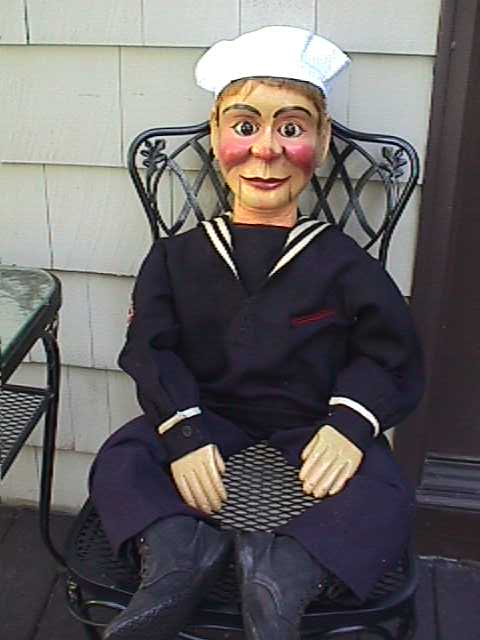
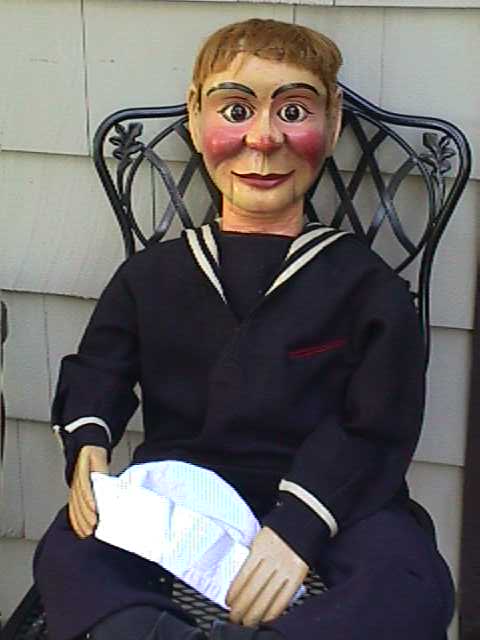
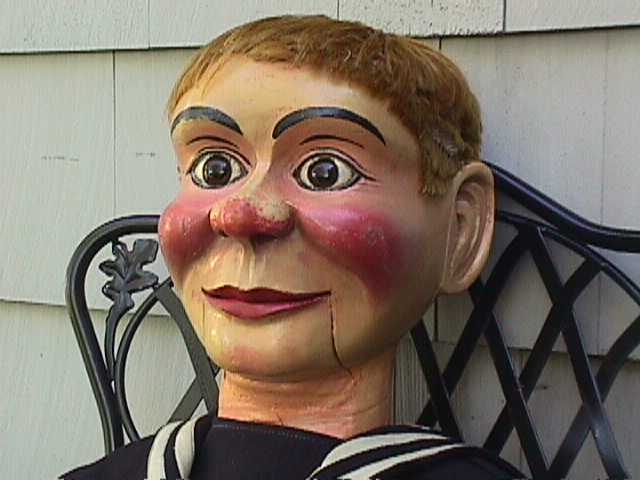
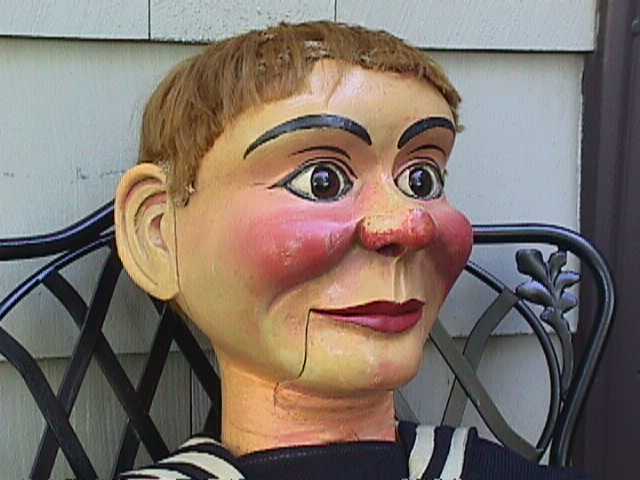
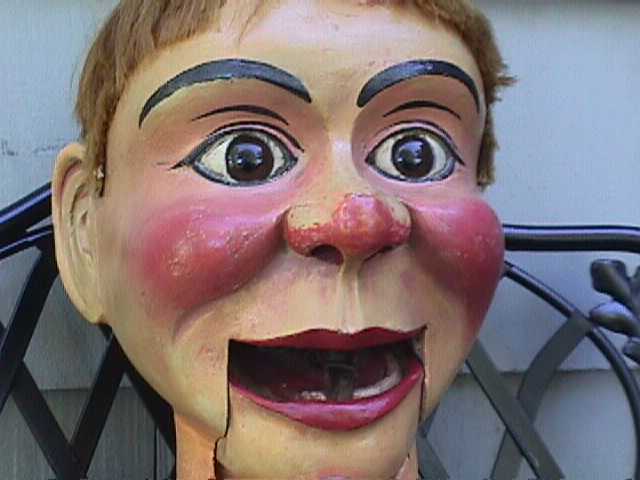
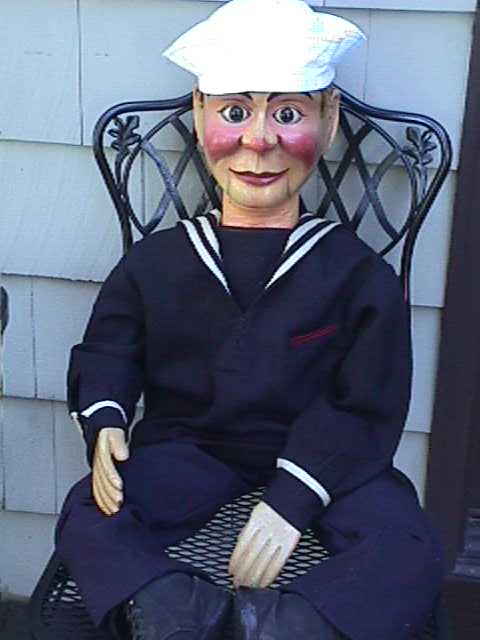
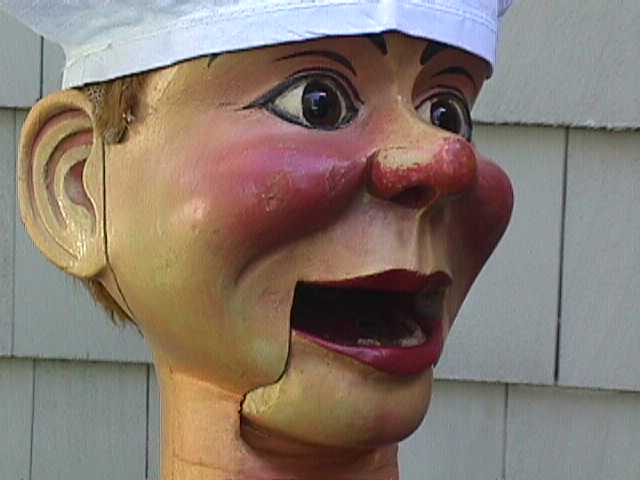
Mack figures in this collection are plainer than what came after. A slot jaw, sometimes a rolling-eye winker, and little else is the norm — one example is singled out precisely because it also carries a smoker and a spitter, which is described as unusual for the shop. Heads mount to the bottom board on pins, giving the head a full rotation, a construction later makers copied.
Contested
Attribution in this field is recorded, not settled. Where the sources disagree we print the disagreement and stop.
Who made the original Charlie McCarthy?
The most repeated attribution in the field, and it does not hold still. A 1970 master's thesis by Kenneth Warren Deutscher has Bergen sketching the boy and submitting specifications to the master woodcarver Charles Mack, and derives the name itself from the maker's — Mack, with a Celtic prefix, giving McCarthy. Dan Willinger's own timeline puts the 1922 build at the Mack factory and marks Frank Marshall's hand only as possible, while elsewhere on the same site he argues that Mack made an early version and Marshall made later ones, so both can claim it. A letter supplied by the Bergen Foundation is reported to credit Theodore Mack, not Charles and not Marshall; we have Willinger's description of that letter, not the letter. A third account has Bergen choosing an existing stock head off a shelf and having it customized, which is incompatible with the thesis as stated. And Bob Isaacson's chronology leaves Frank Marshall and Alex Cameron running the shop's figure work in 1922 — putting a fourth name on the bench that nobody has weighed.
Jimmy Vee's first-hand position is that it was Mack, and that Marshall has been credited since. The corpus supports a Mack attribution and does not settle which Mack, or whether the question survives the discovery that there was more than one Charlie.
Who made Frank Byron Jr., the Great Lester's figure?
Stan Burns's book, and a TalkingComedy.com article drawing on it, report Lester saying he made the figure himself with a little guidance from Theo Mack. A 1945 article in Coronet credits Mack. Willinger favors Mack and reasons from silence — Lester is not known to have made any other figure — which is suggestive rather than probative. The same page that poses the question also states flatly elsewhere that Frank Byron Jr. was the Mack shop's first figure.
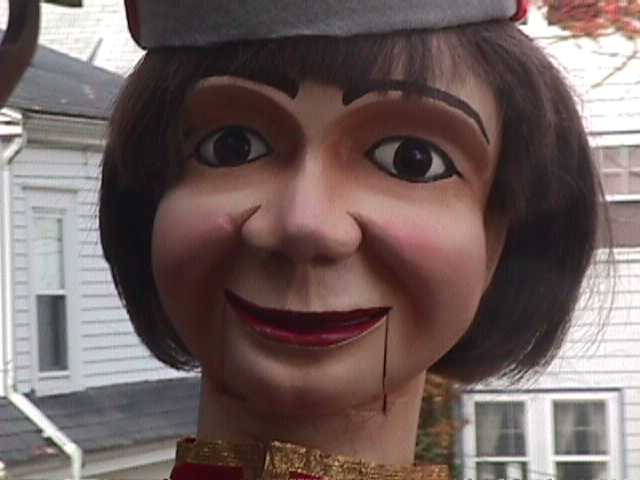
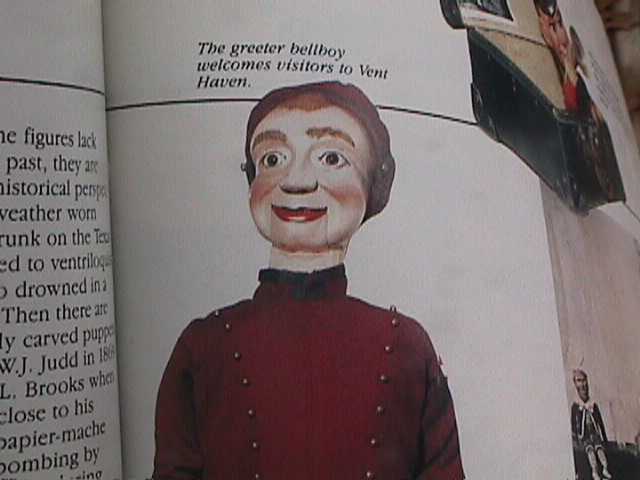
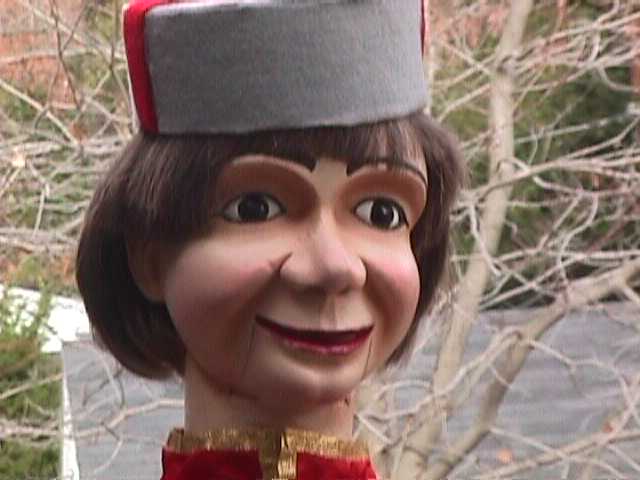
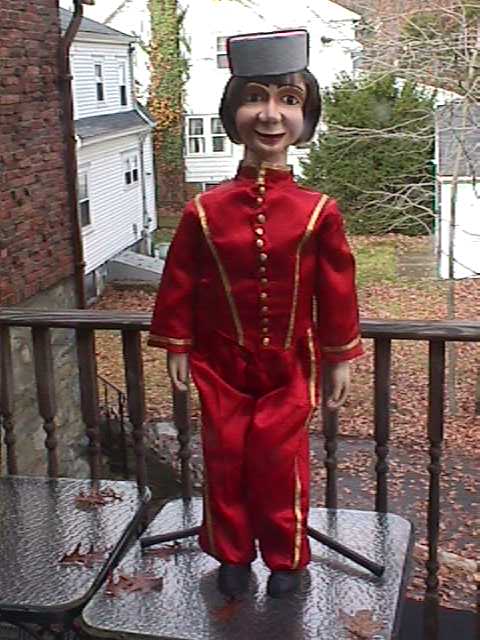
When was Al Saal's Mack figure Jerry the Bellhop made?
Two records from the same institution disagree. One gives Theo Mack & Sons, Chicago, Fall 1921. The other says Saal ordered the figure from Charles Mack and it was shipped to him on February 5, 1923. An order date and a ship date can be years apart, so these may be reconcilable — but as written they are two different creation claims.
The figures
62 photographs across 8 cataloged objects. Each object is one entry in the register — where a character name covers two physical figures, they stay two entries, because the character outlives the object more often than the record admits.
90% Original 5 photographs
- Movements
- slot jaw / moving mouth; winkers; spitter
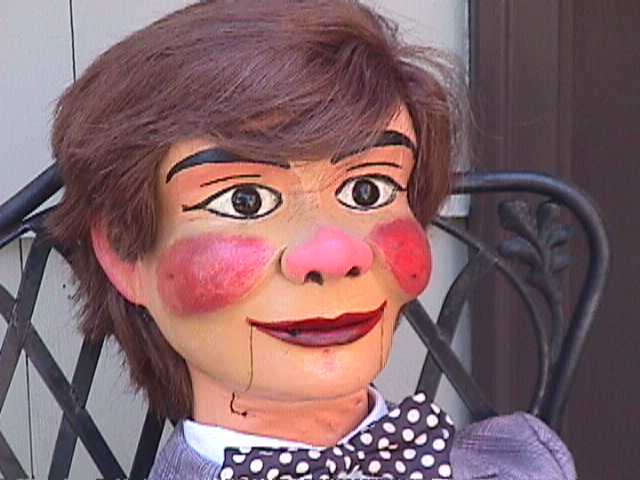
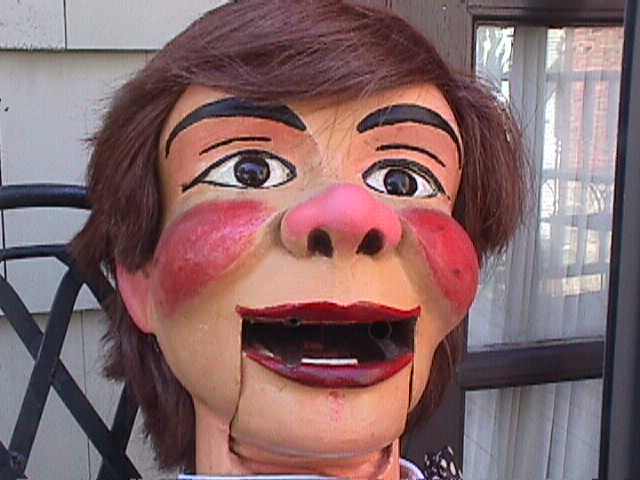
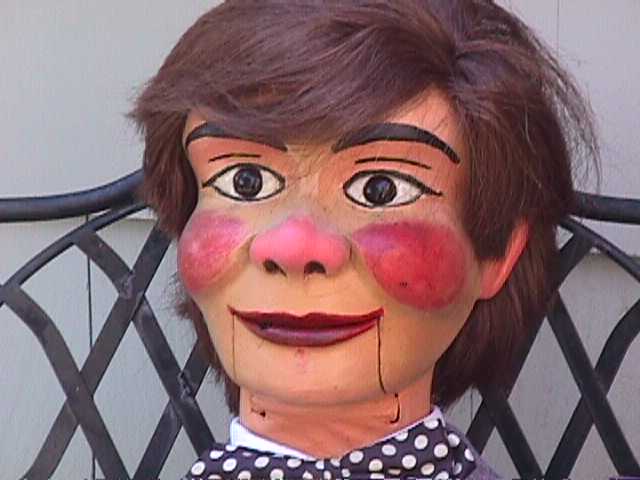
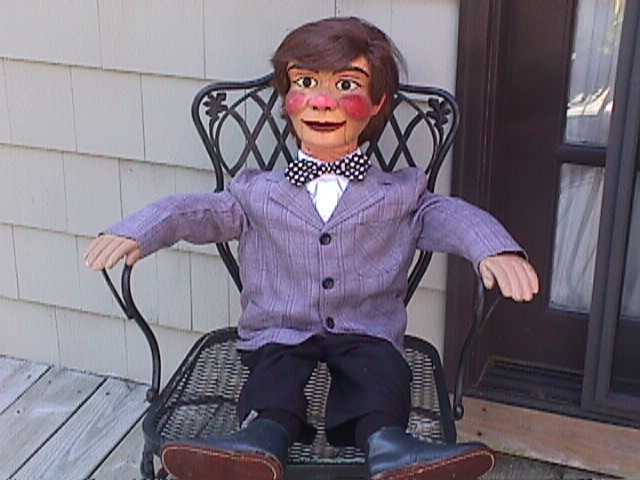
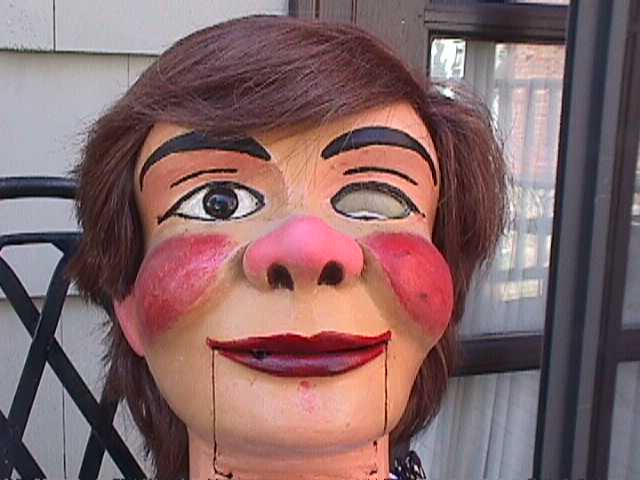
Prime Example 4 photographs
- Movements
- slot jaw / moving mouth; winkers
Recorded owner Jake Sills who had; David Erskine. as stated on the source page when it was written — not current ownership
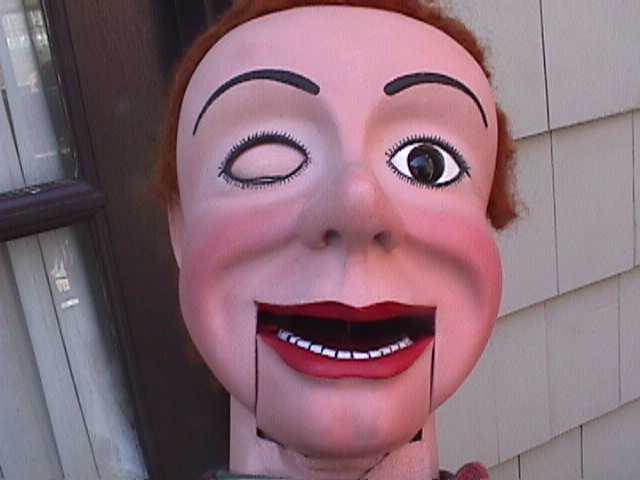
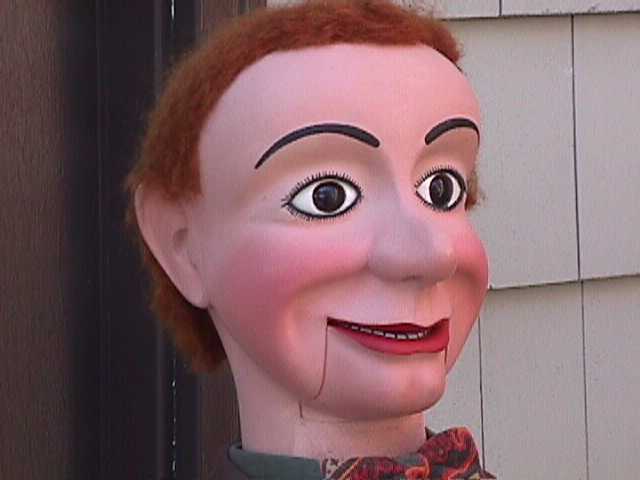
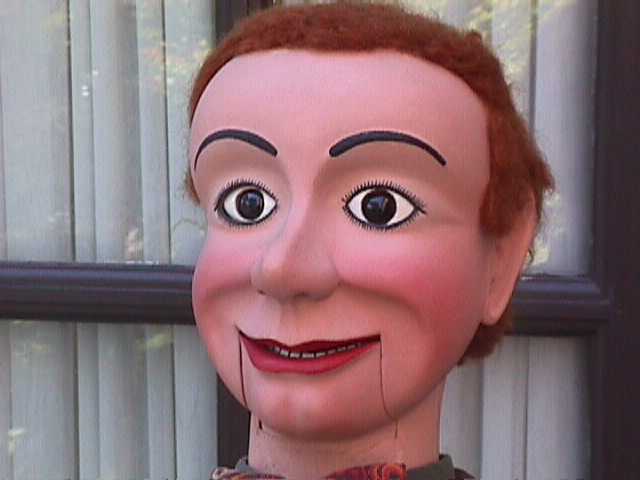
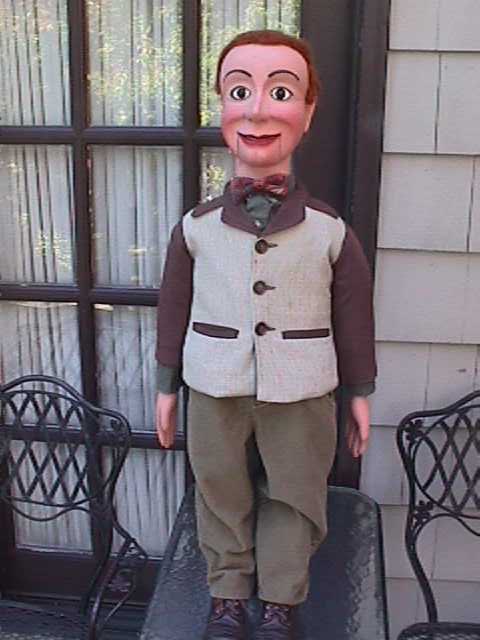
Pinxy 3 photographs
- Movements
- slot jaw / moving mouth
- Dates given
- 1930
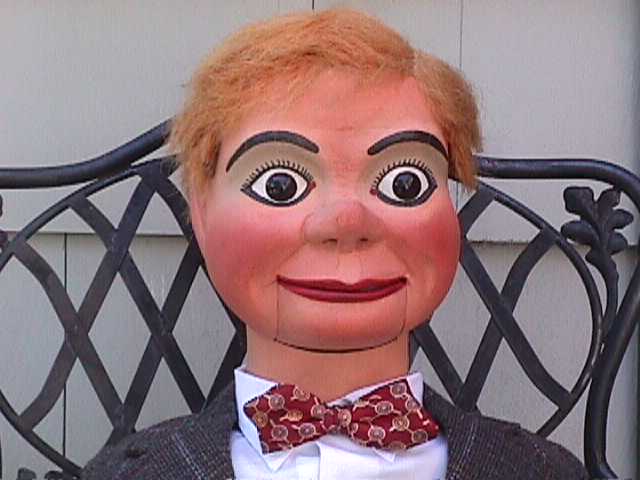
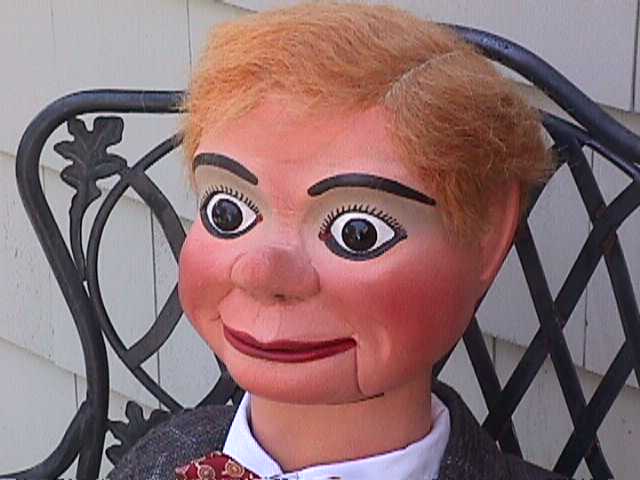
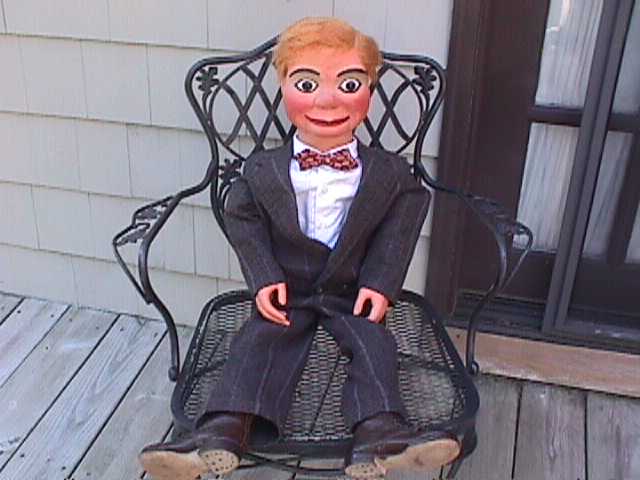
Early 3 photographs
- Movements
- head stick
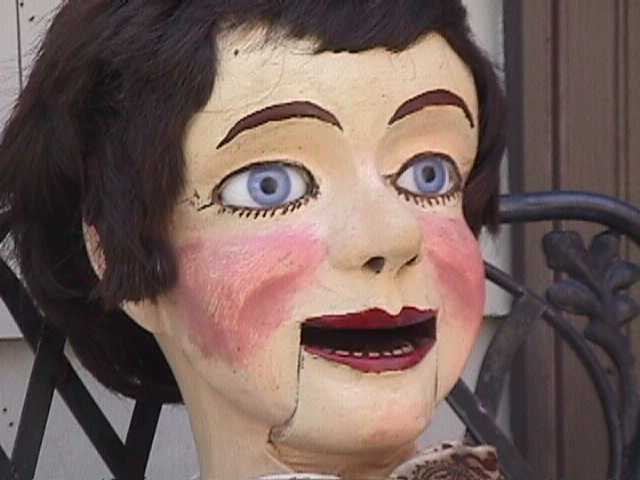
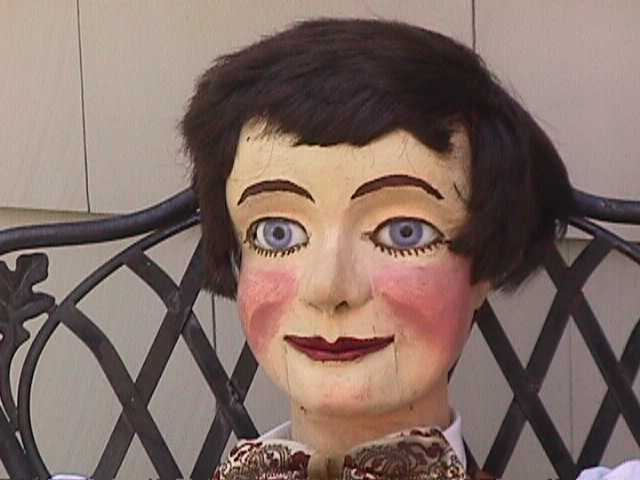
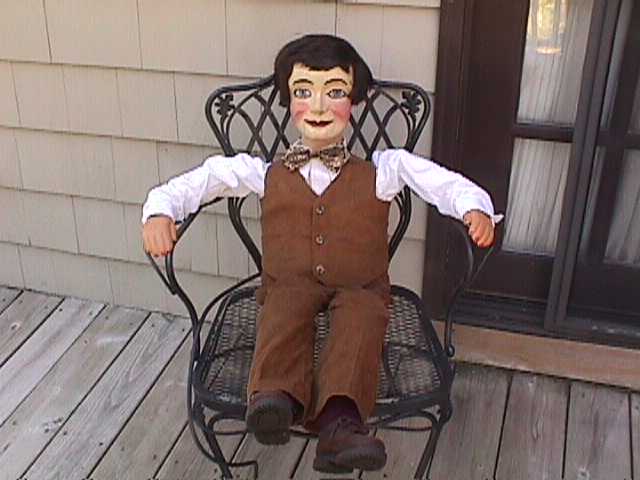
Mack 05 5 photographs
- Movements
- slot jaw / moving mouth
- Dates given
- 1922
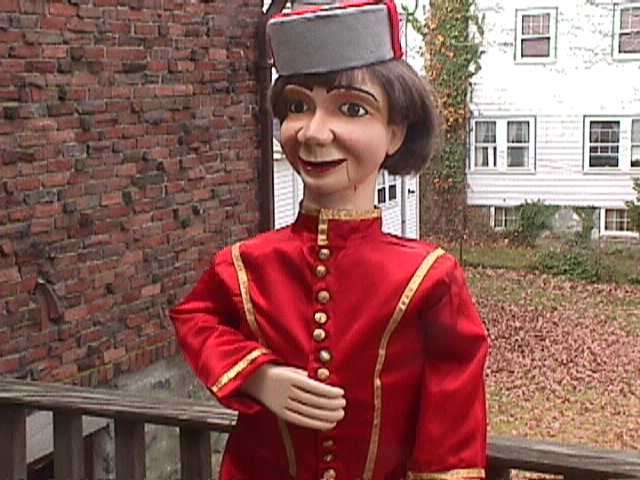
Pre Charlie Charlie 9 photographs
- Size
- 40"
- Movements
- slot jaw / moving mouth; winkers; head stick
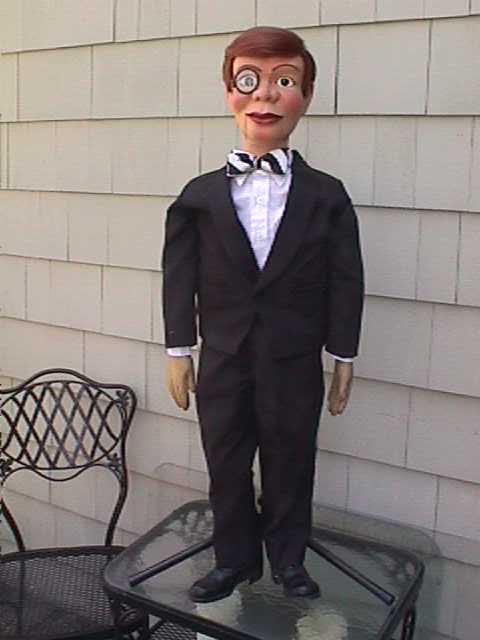
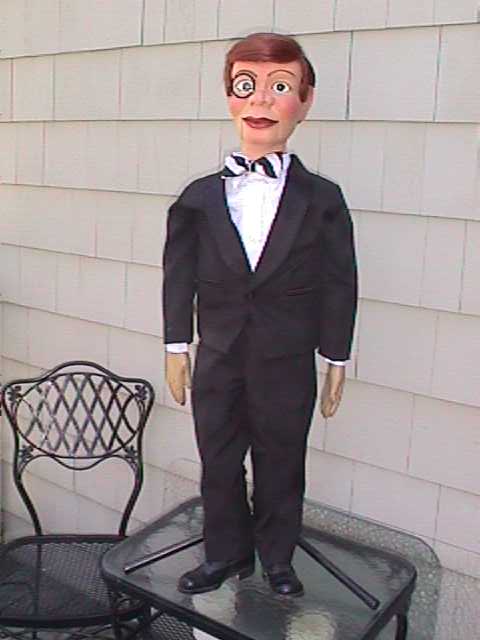
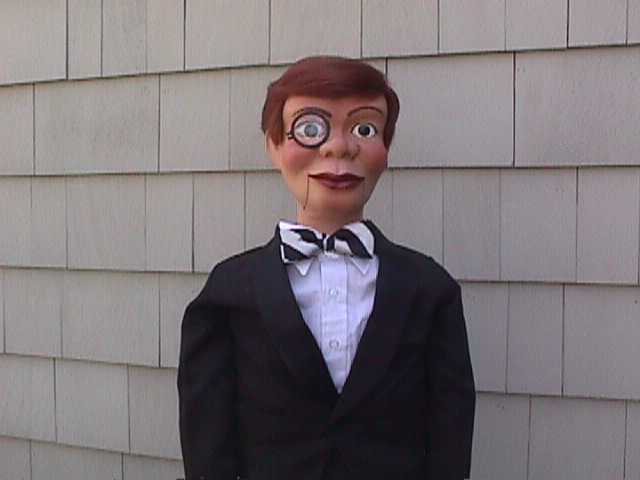
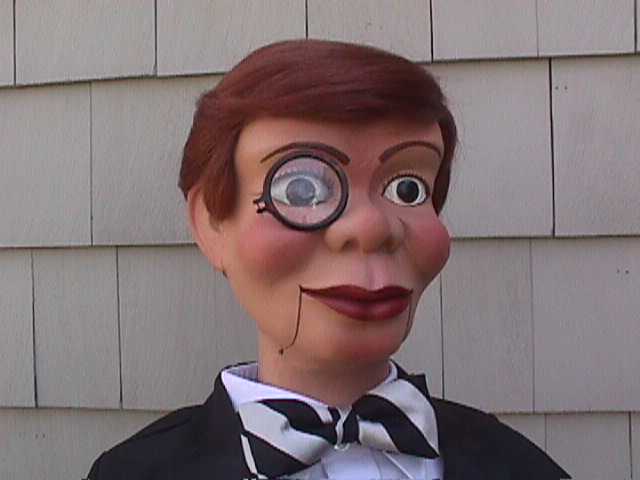
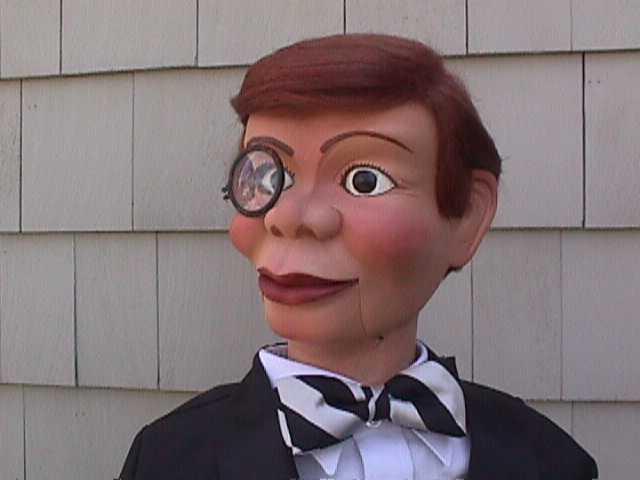
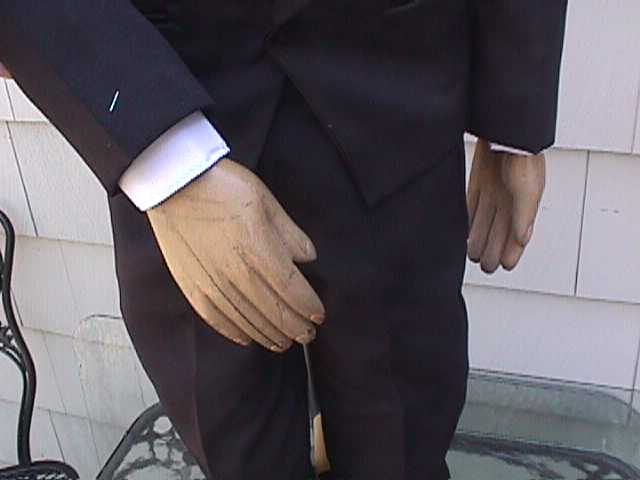
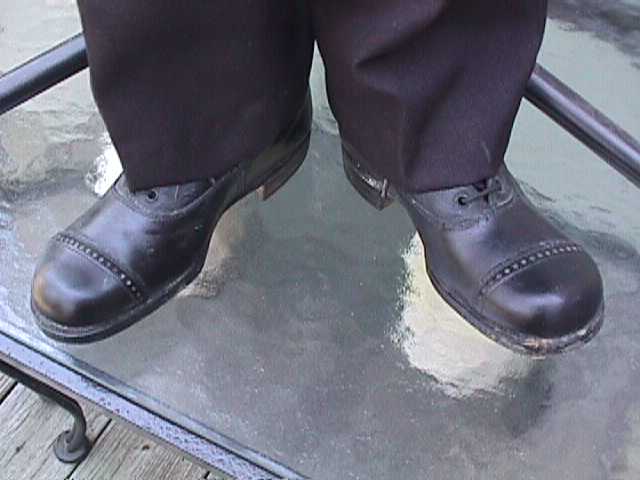
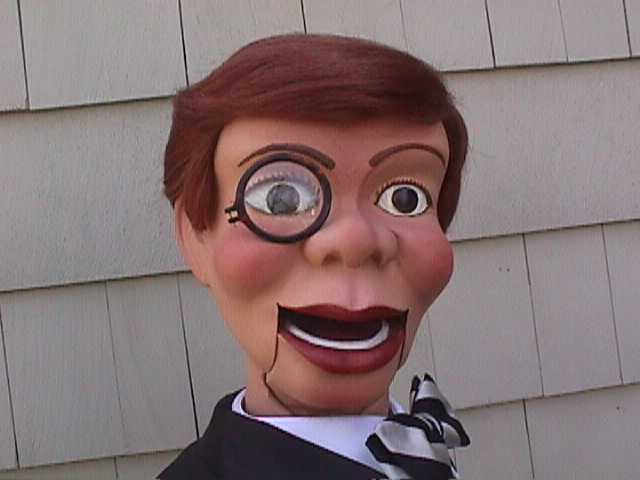
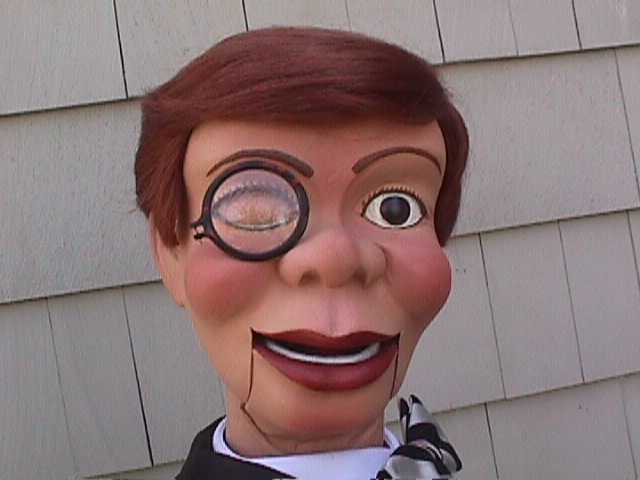
Frank Goldquist 25 photographs
- Dates given
- 1887; 1960; 1980
Recorded owner Ventriloquist Central Collection as stated on the source page when it was written — not current ownership
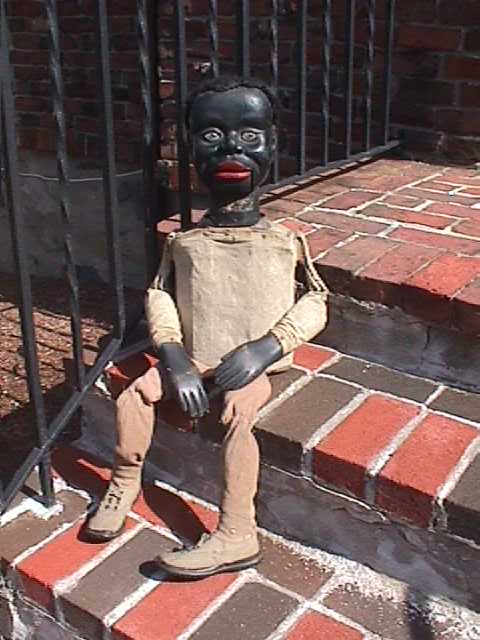
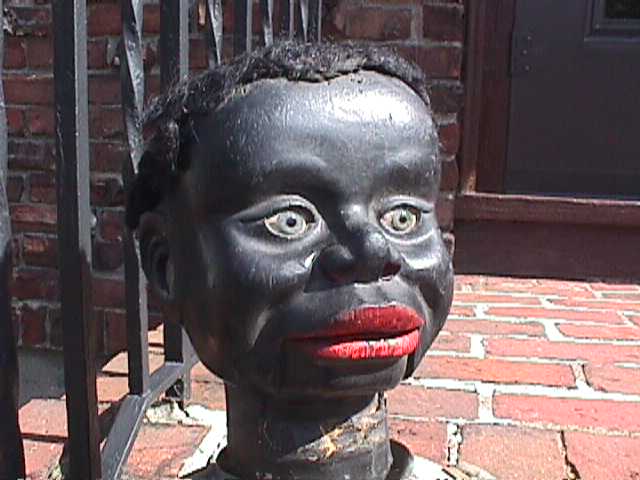
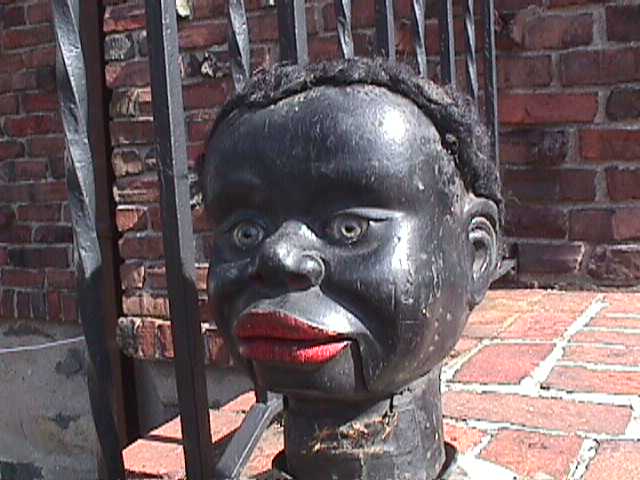
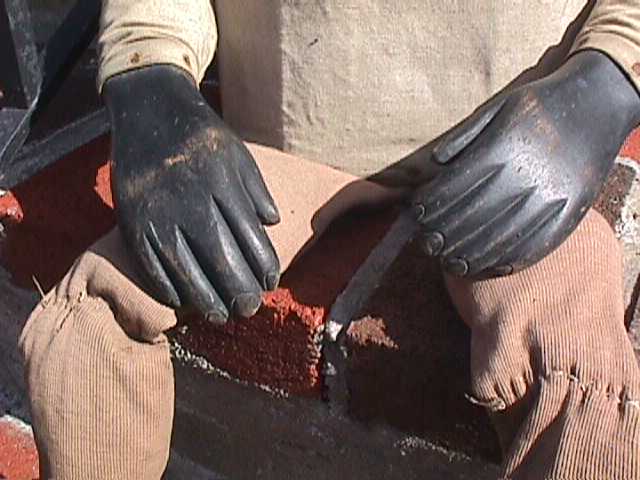
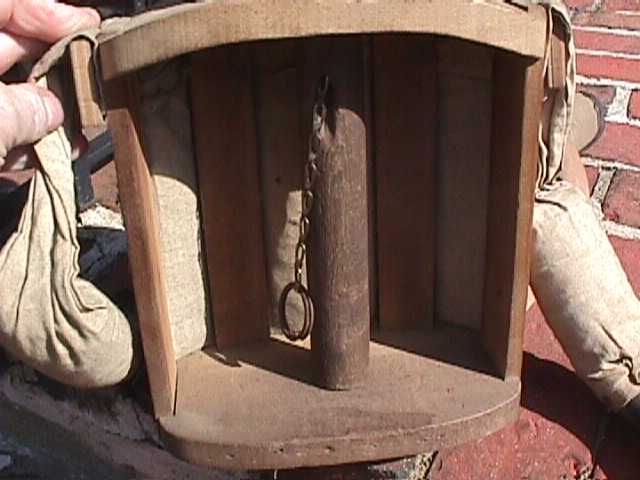
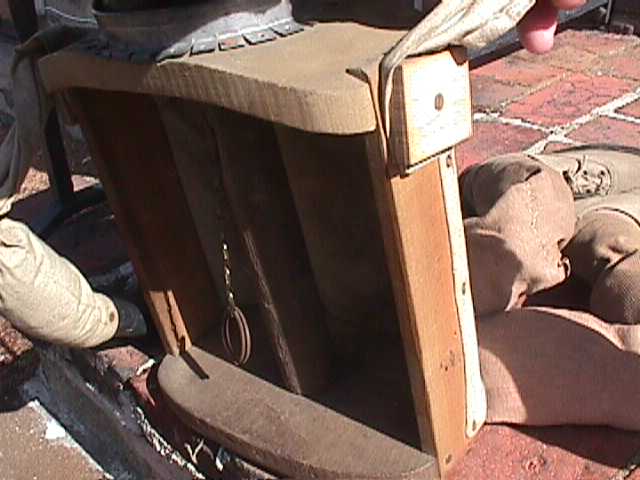
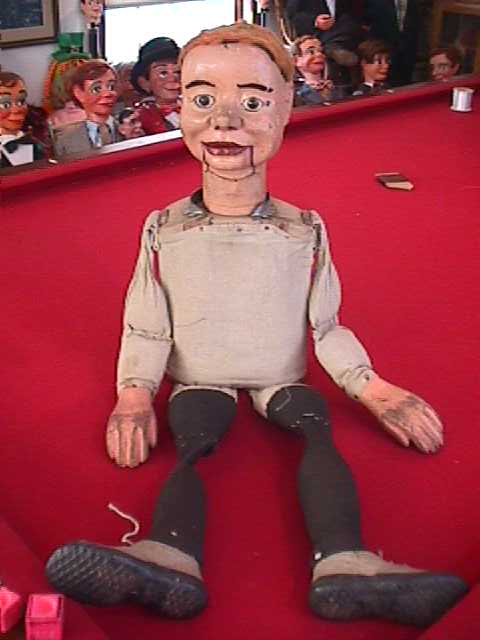
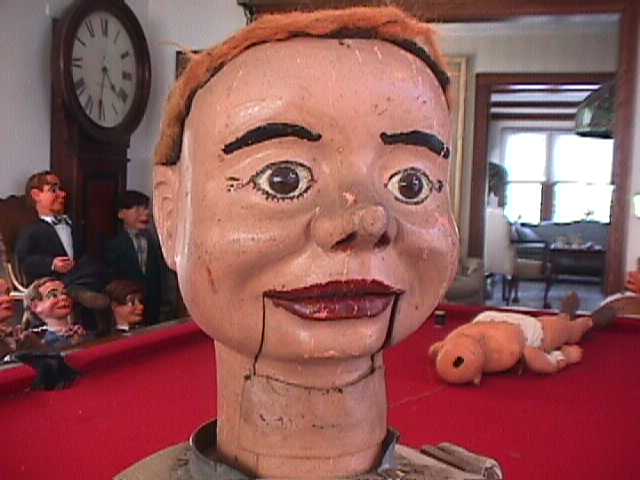
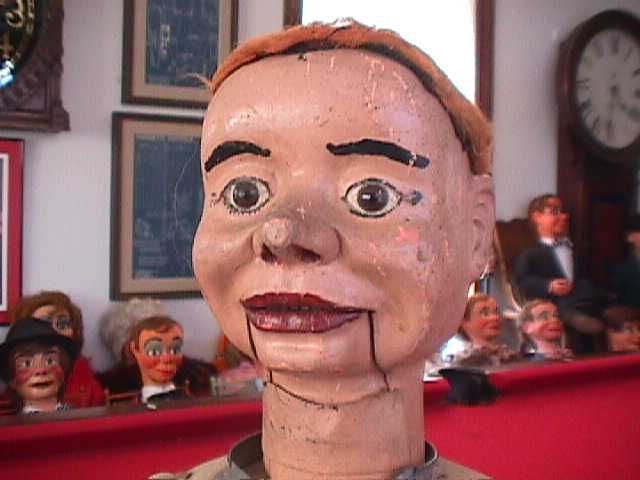
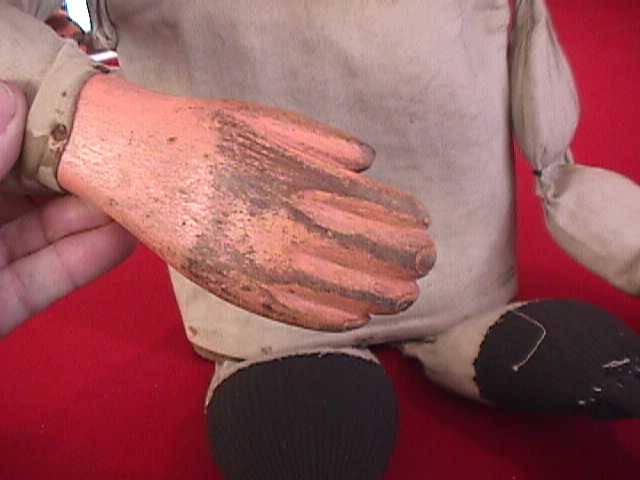
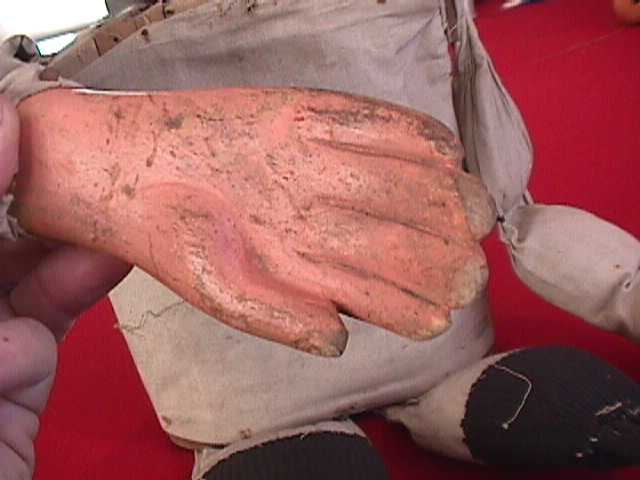
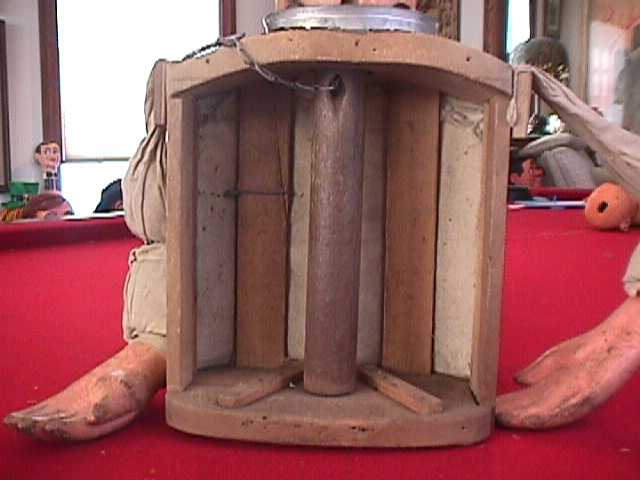
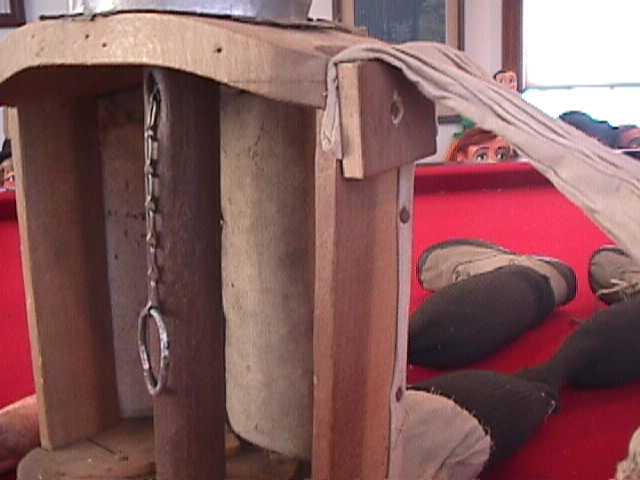
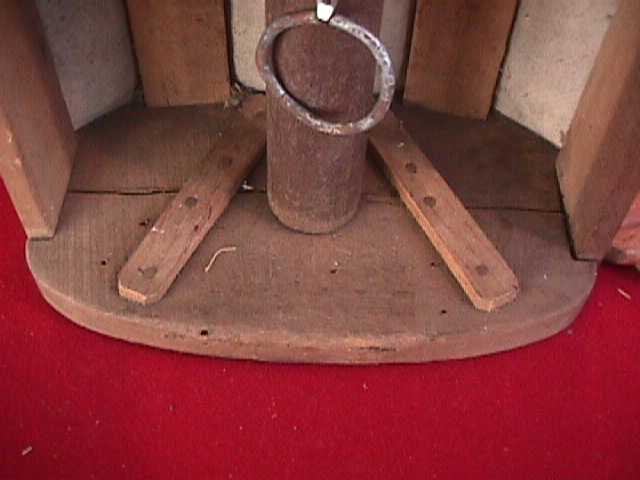
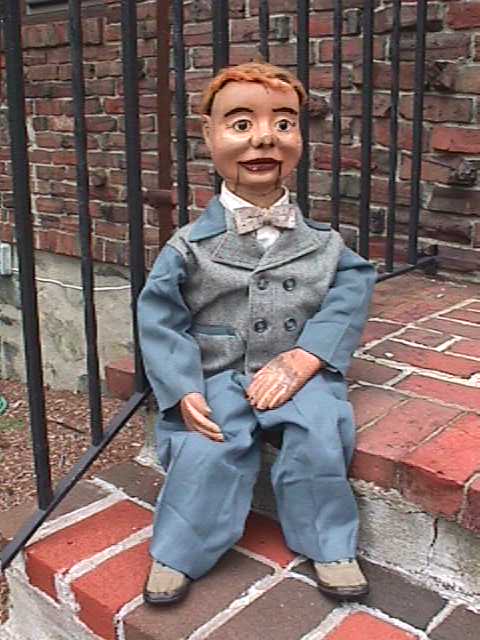
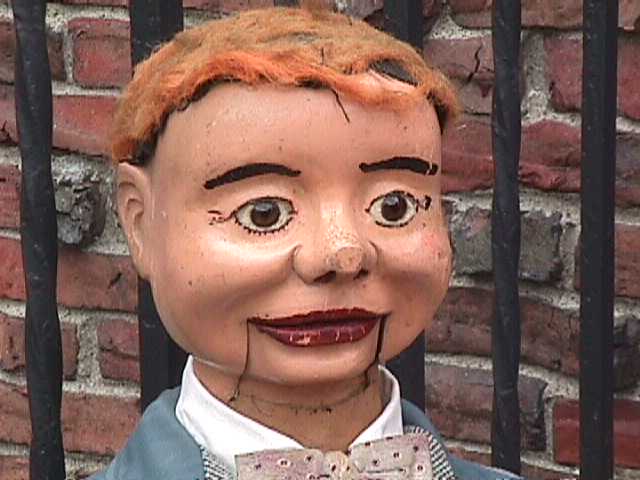
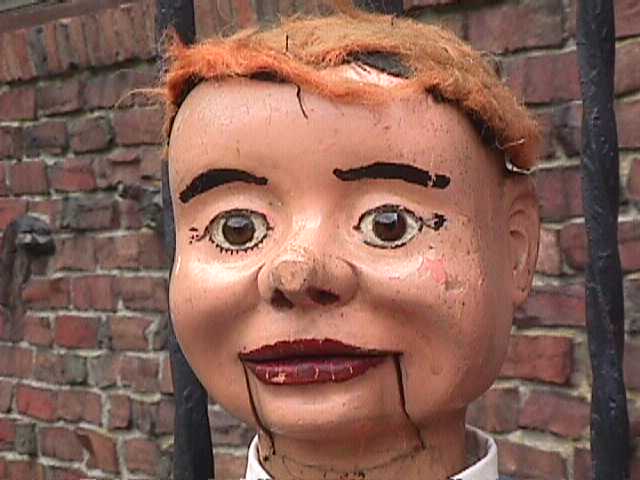
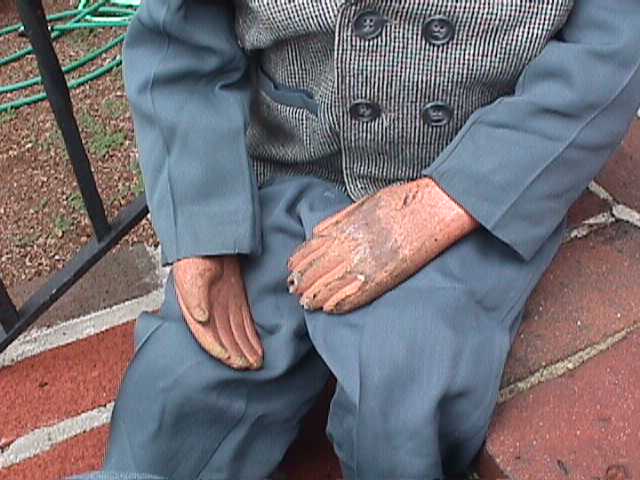
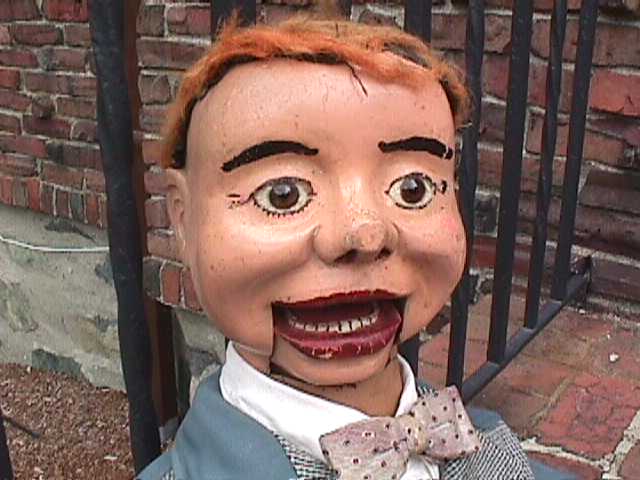
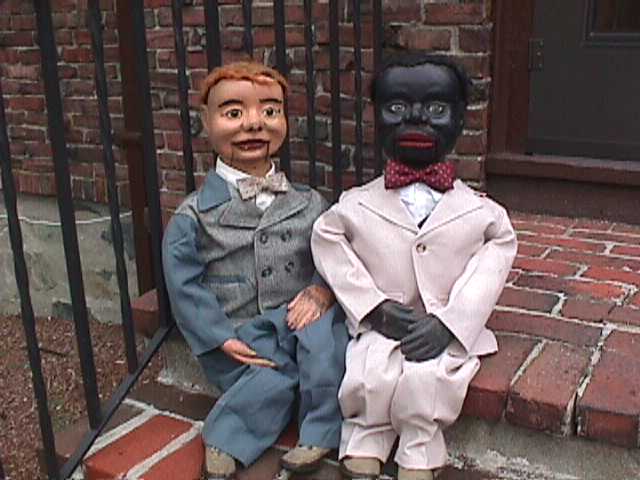
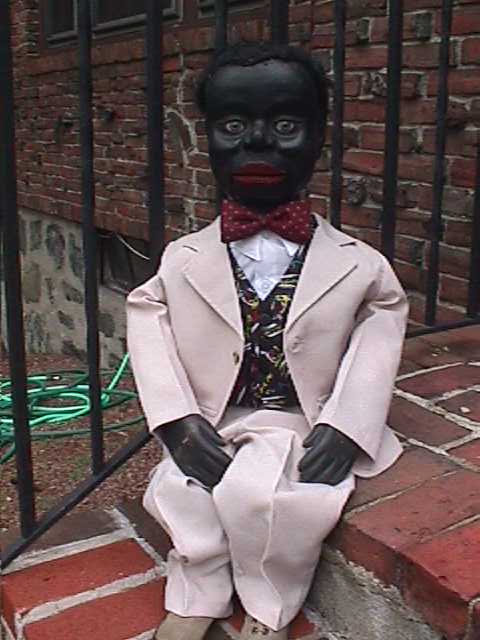
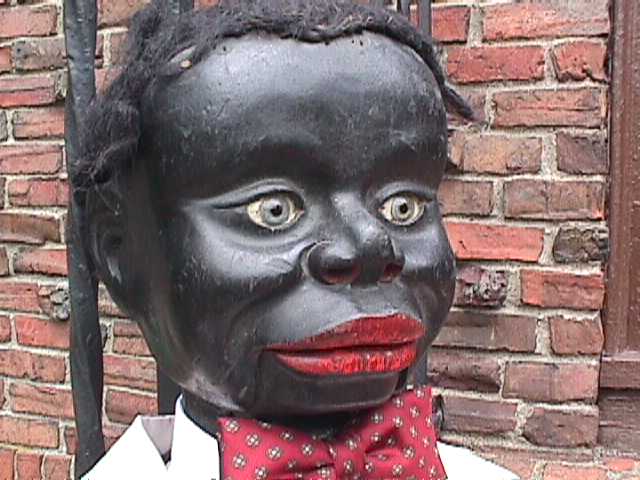
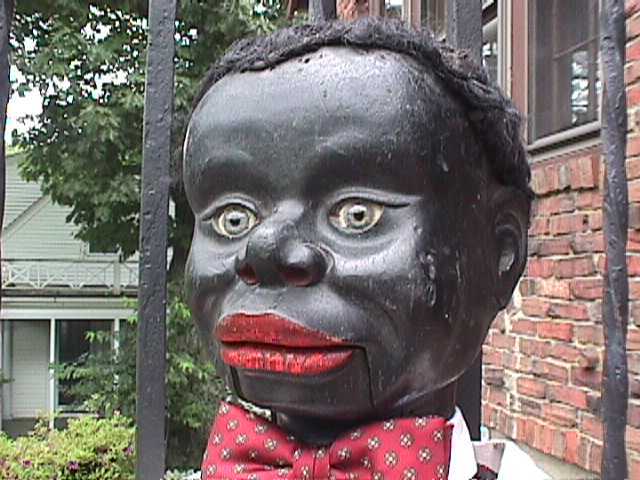
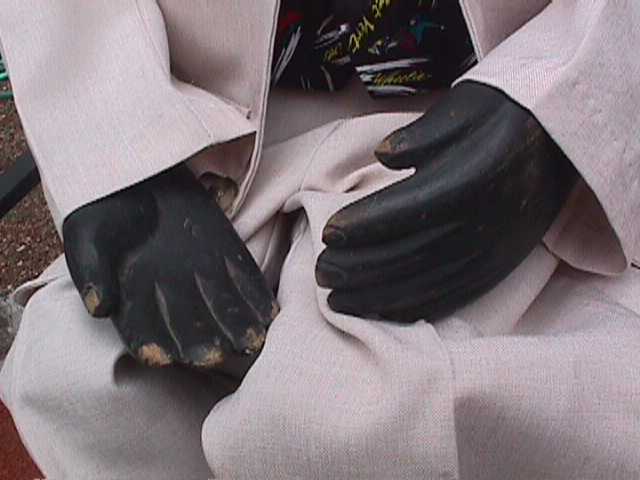
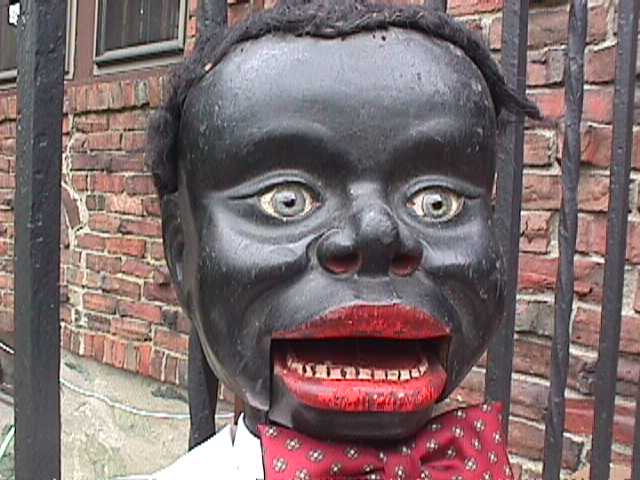
Great Theodore 8 photographs
- Size
- 42"
- Movements
- spitter; head stick
Recorded owner Ventriloquist Central Collection as stated on the source page when it was written — not current ownership