
Figure maker
Ray Guyll
The Pacific Northwest master, and the maker most responsible for teaching other people to build. He wrote the manual a generation learned from.

Ray Guyll fell for a piece of wood before he ever picked up a chisel. He saw Disney's Pinocchio as a kid, and that did it, he was gone.[1] In college he wanted a ventriloquist figure so badly that he went looking to buy one, found out he couldn't afford it, and did the one thing a stubborn kid can always do: he taught himself to build his own.[1] That decision turned into a fifty-year career, and by the end of it the whole trade had settled on a nickname for him. They called him The Master.[1] Pull up a chair, because a good piece of what you love about this art passed through this one man's hands, whether you know his name or not.
Music paid the bills first
Before any of that, Guyll was a musician, born in Tulsa, Oklahoma, in 1940 and raised mostly in Washington State, and music stayed his other whole life.[1] He played saxophone in a band called the Cherchers in the late 1950s and early 1960s,[2] then earned two master's degrees, one from Western Washington and one from the University of Washington, both in conducting and performance.[1] He taught band for eighteen years, sixteen of them at Chinook Junior High in Bellevue, spent eight years conducting the Woodinville Community Band, a group that ran from age twelve to eighty, and later directed an eighteen-piece big band with a name that only makes sense in Seattle: the Microsoft Jumpin' Jive Orchestra.[1] Plenty of people in this trade know him only as a builder and never learn he was, by training, a bandleader.[3] Fair enough. He kept that half of himself mostly for the bandstand.
Wood first, then the mold
Guyll started building figures professionally in 1968, in the same current running through the whole American trade at the time: a maker named Jack Coats.[4] Coats worked wood by hand, and so did Guyll at first. Then he tried casting, and by his own account the results were spectacular enough that he never went fully back.[4] In 1971 Chicago television hired him for a program on ventriloquism built around Jimmy Nelson.[5] And in 1984 he put his own tools down for three years and went on the road with his own act. His character was Lucky Louie, who started life as a Western sheriff and, somewhere out on that circuit, turned into a hobo.[5] He also worked clubs and cruise ships with a second character, Iron Jaw McGraw, one his widow later called one of his most ingenious creations.[1] So no, Guyll was never only a maker standing behind a bench. He stood in front of an audience and worked a figure himself, for years, before he settled all the way into the shop.
1975, and the figures nobody could copy
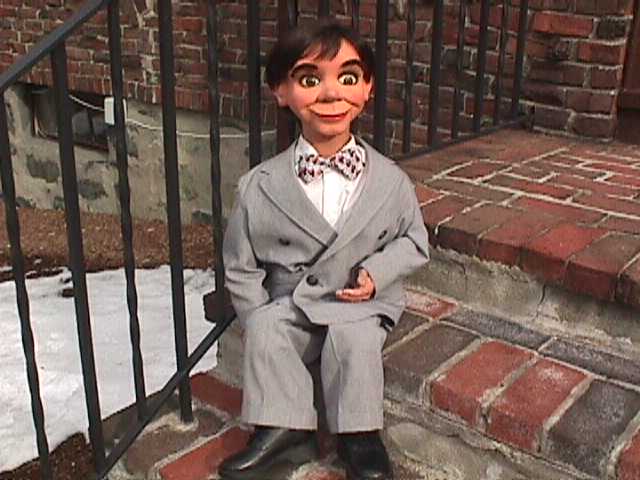
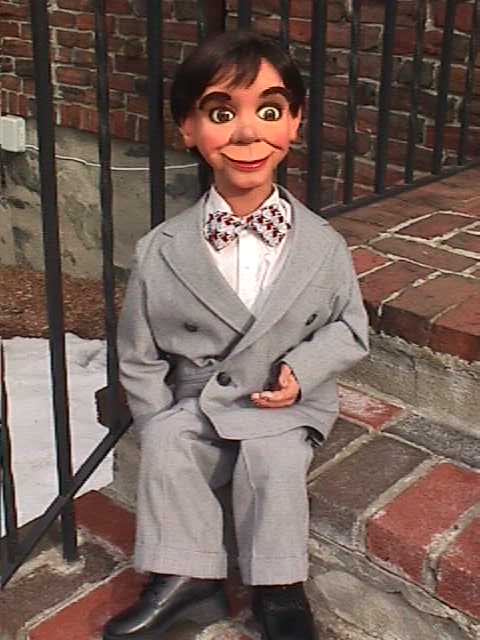
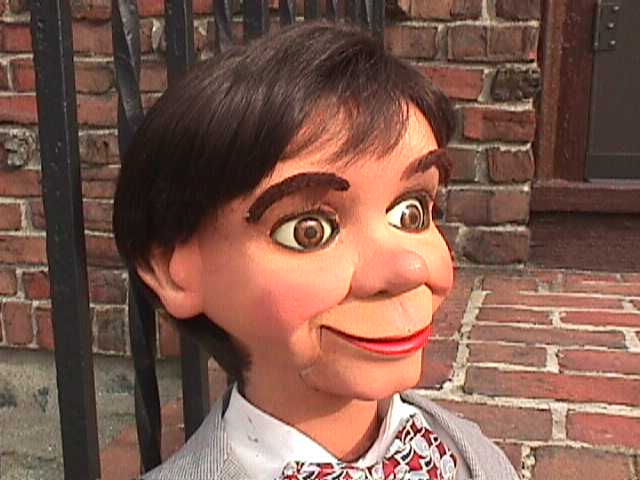
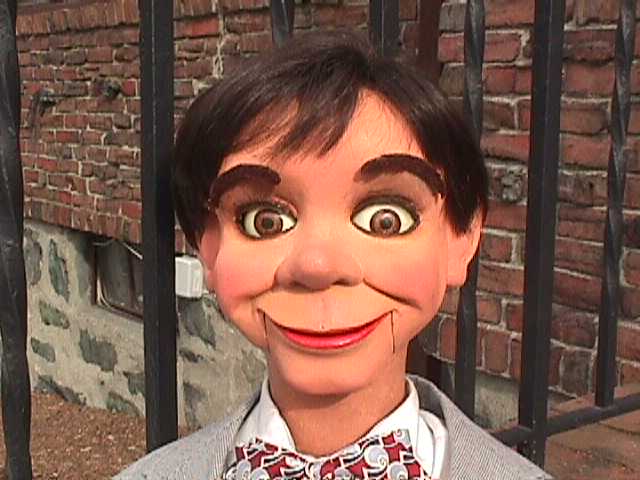
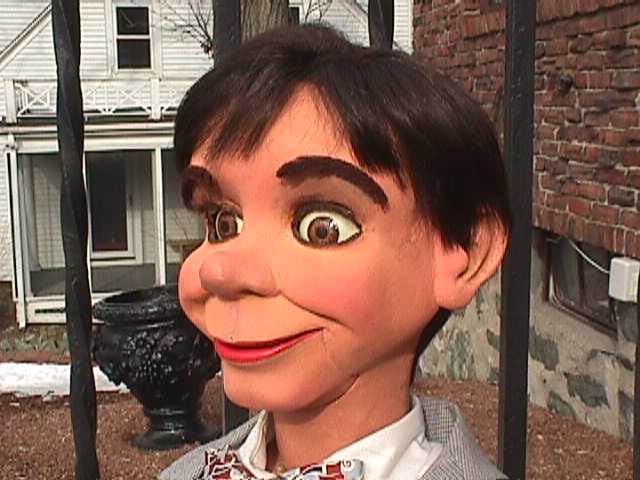
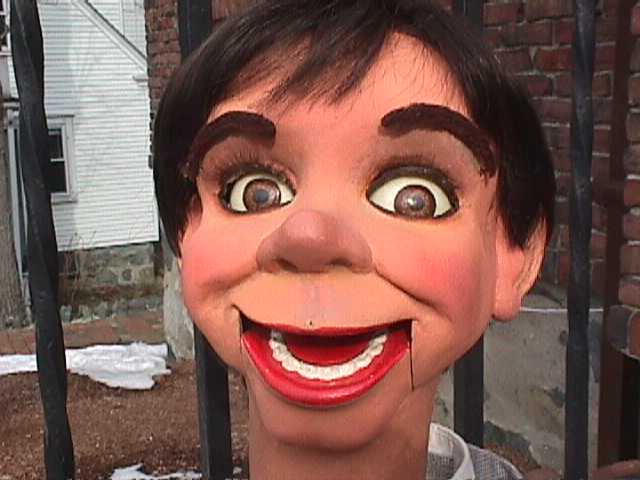
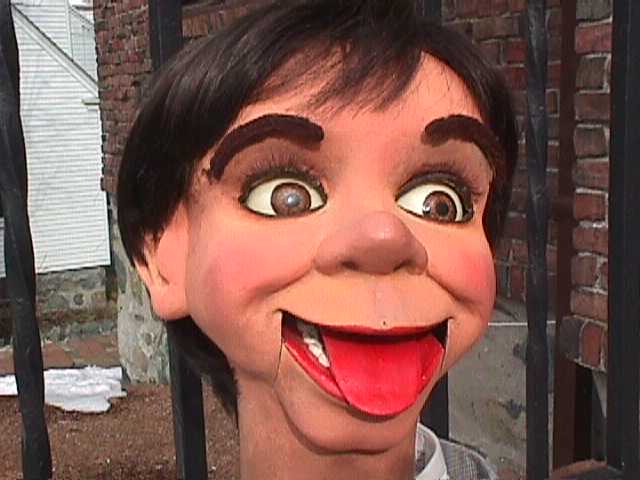
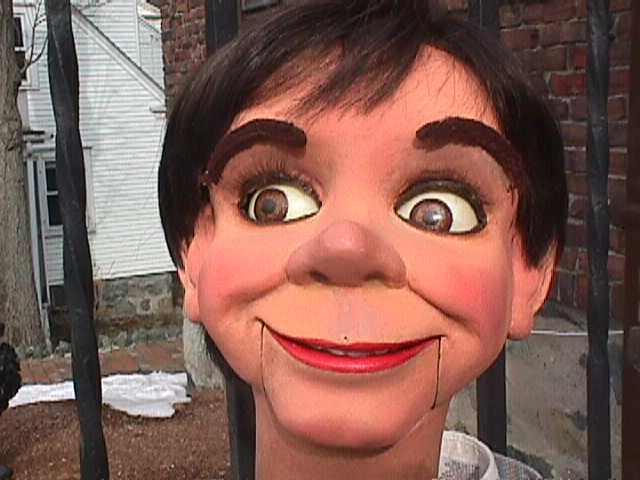
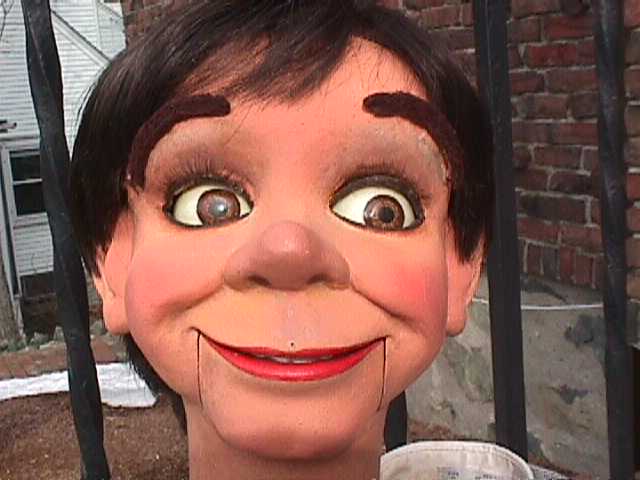
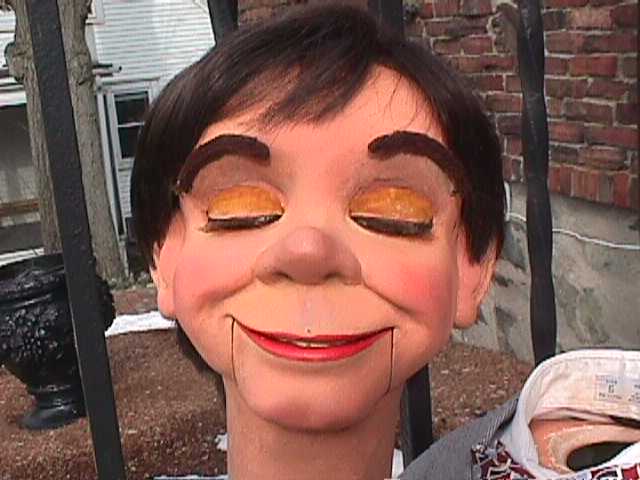
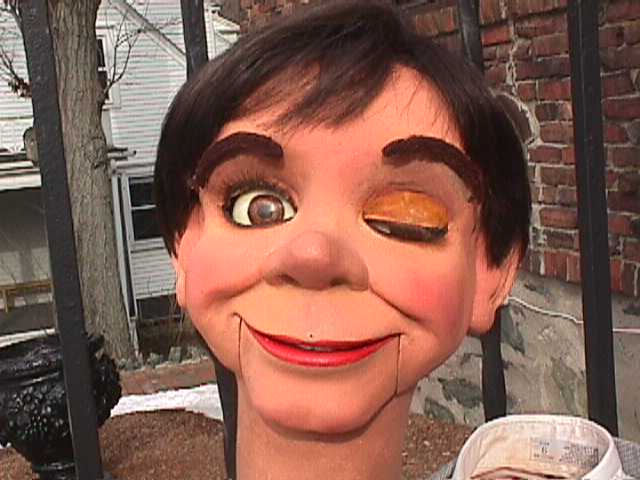
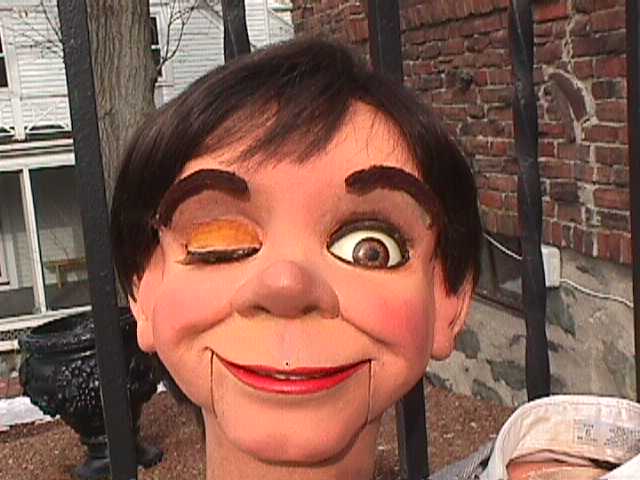
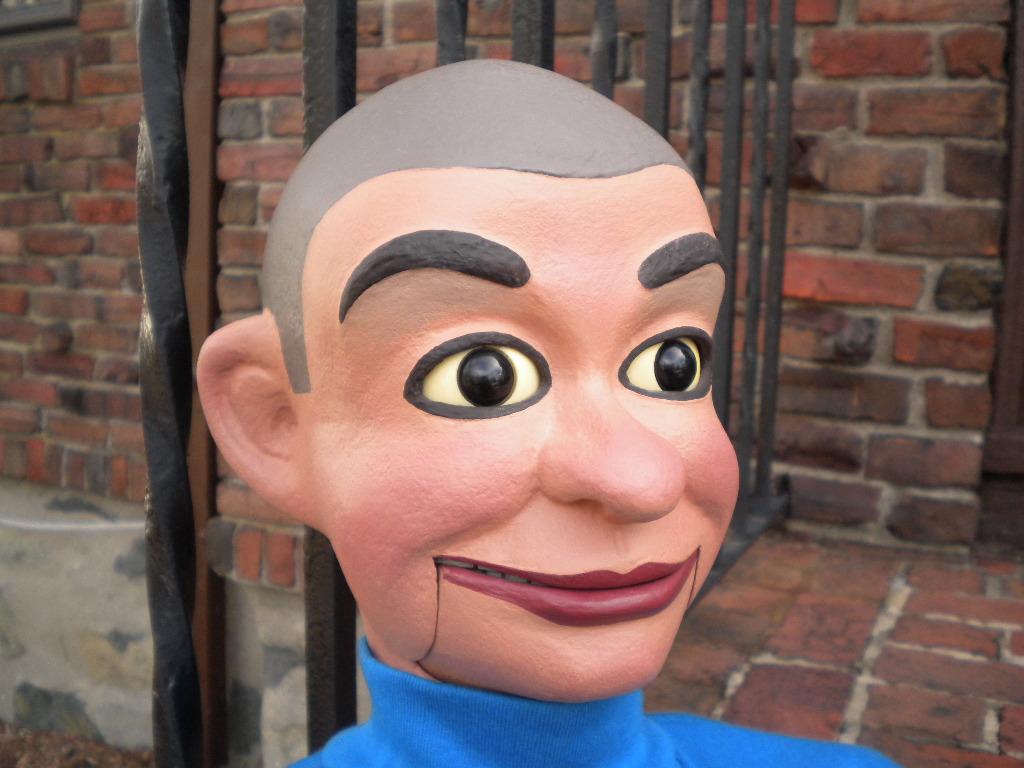
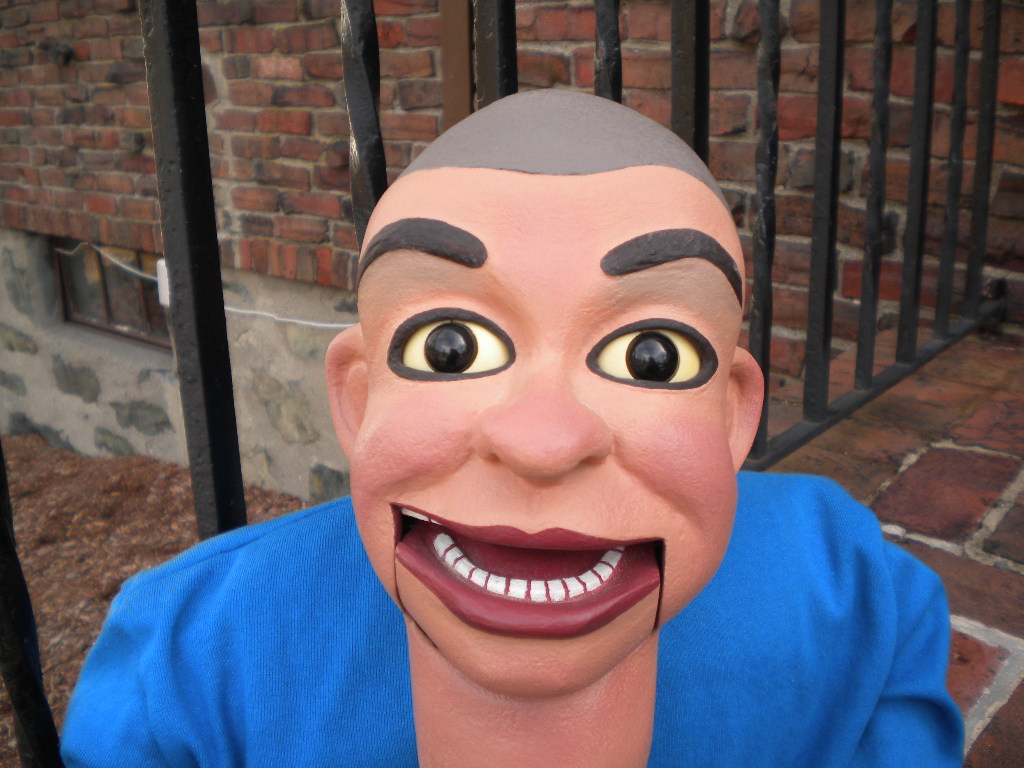
The clearest single day in Guyll's whole career is easy to date: 1975, the Vent Haven Convention. Ventriloquist Evie Van Buskirk asked him for two figures, a girl for herself and a boy for her twelve-year-old protege, Tommy Pretto. She drew the sketches herself. Guyll sculpted the heads in clay, got her approval, and only then cast the final figures, his first work ever in fiberglass.[6] He was booked as the very first lecturer of that convention, and when the room filled up, both finished figures were already seated on the stage, waiting for their new owners to walk in.[6] The price was $700, a serious sum in 1975. He cast two more from that same mold, then destroyed it on purpose, closing the population at four figures for good.[6] That was also Guyll's first Vent Haven lecture, full stop, and the notes from it worked exactly as advertised. A young maker named Gary Koepke bought them separately, went home, and built a figure of his own using nothing else.[7]
The Winchell arrangement
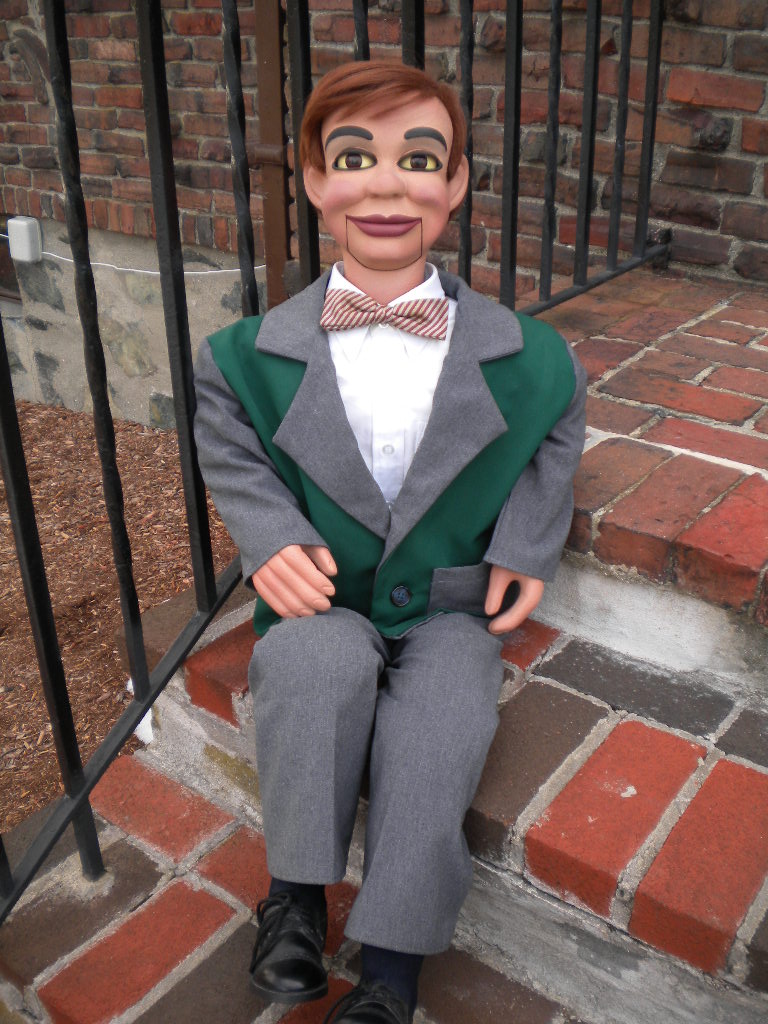
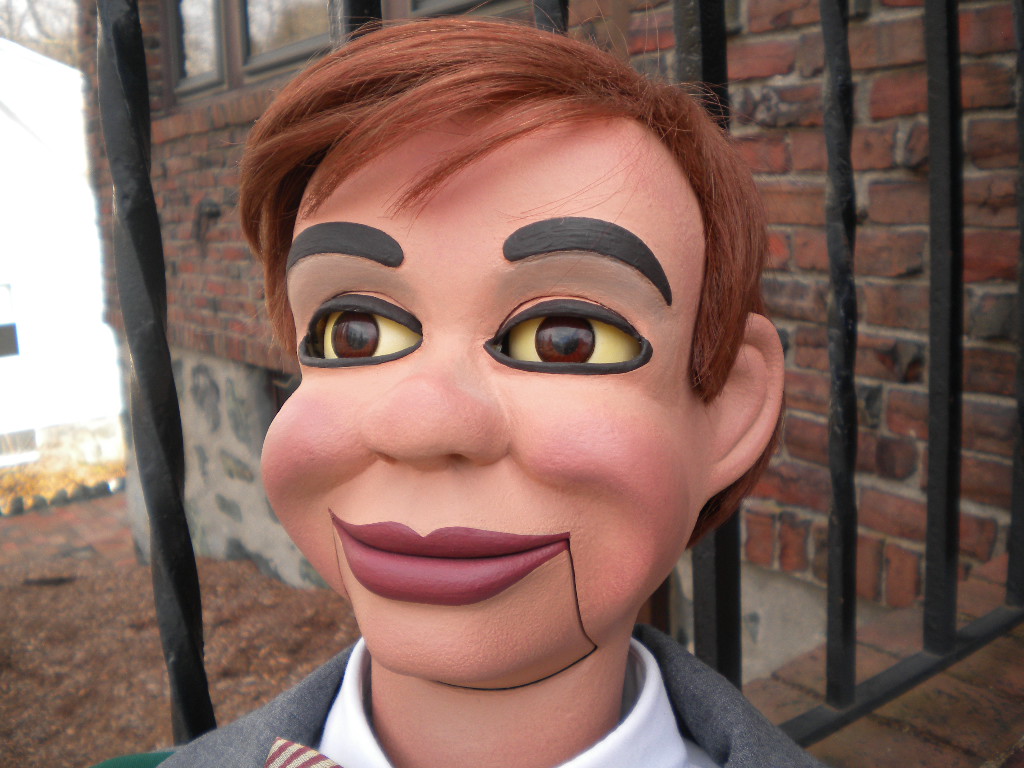
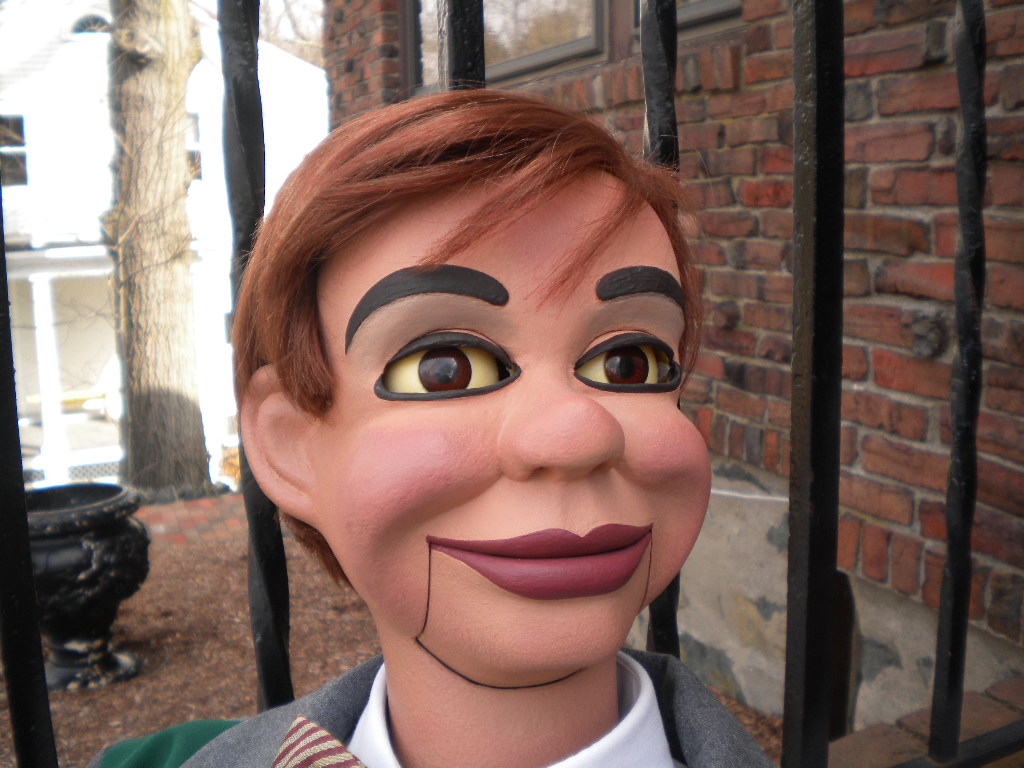
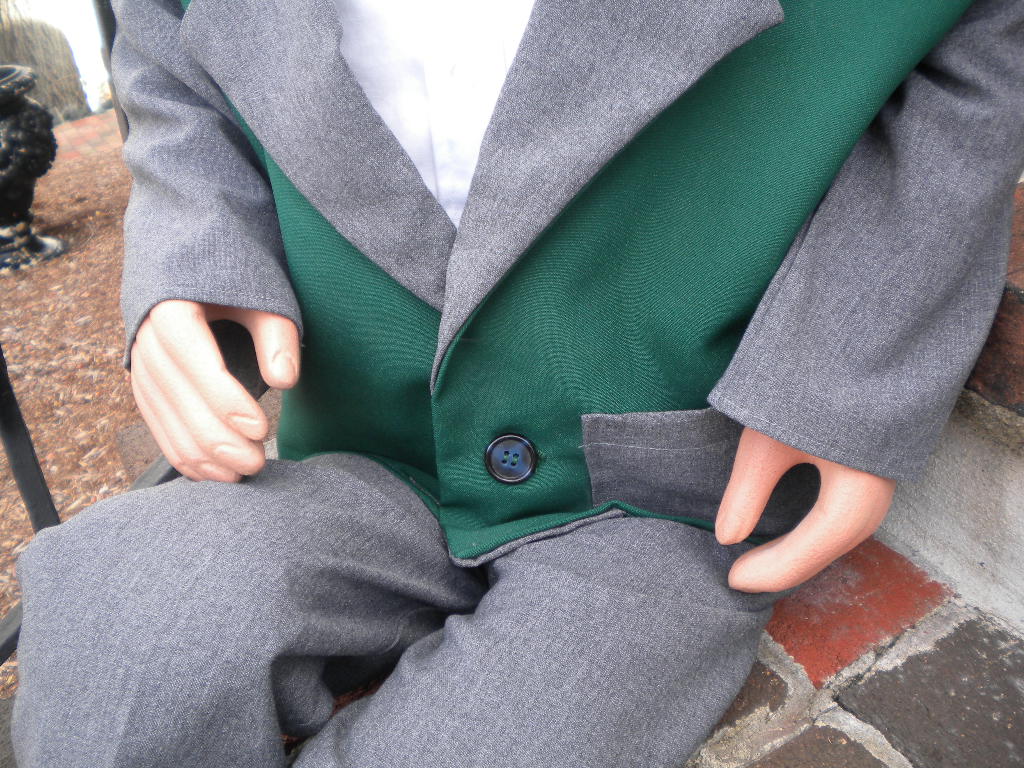
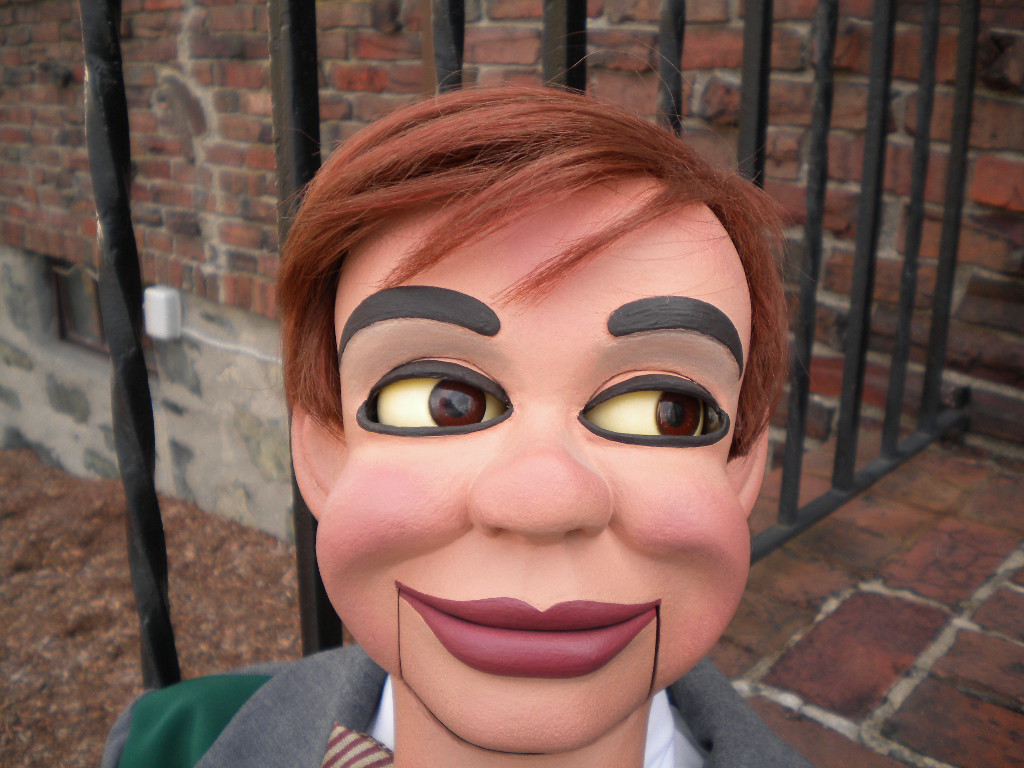
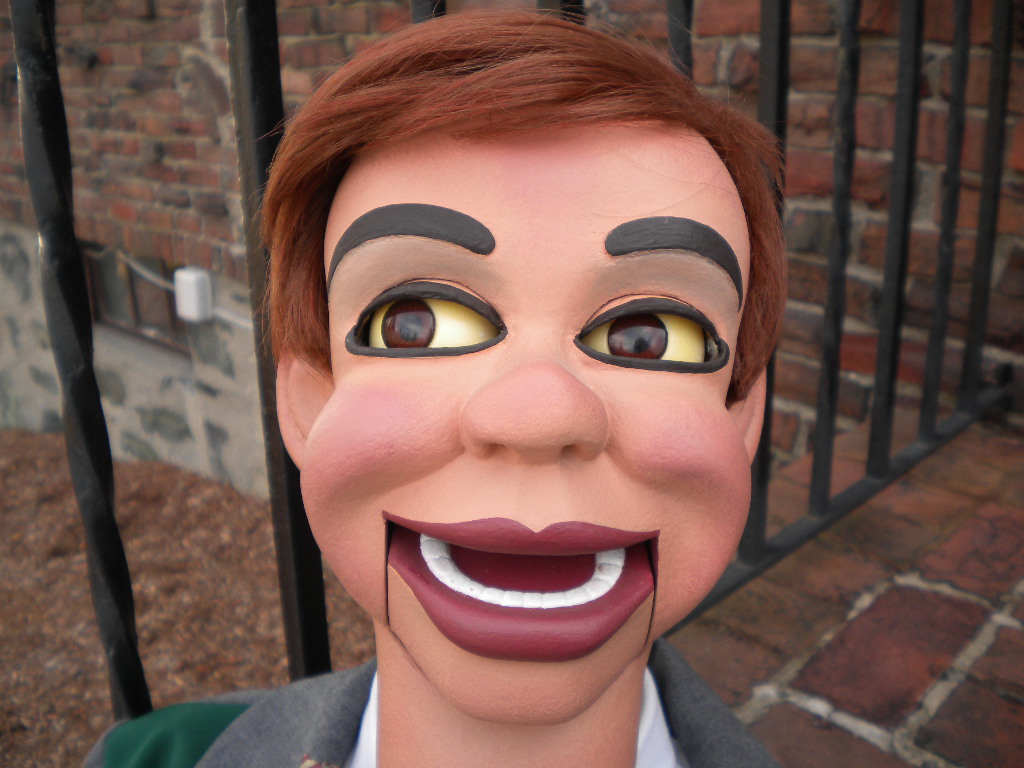
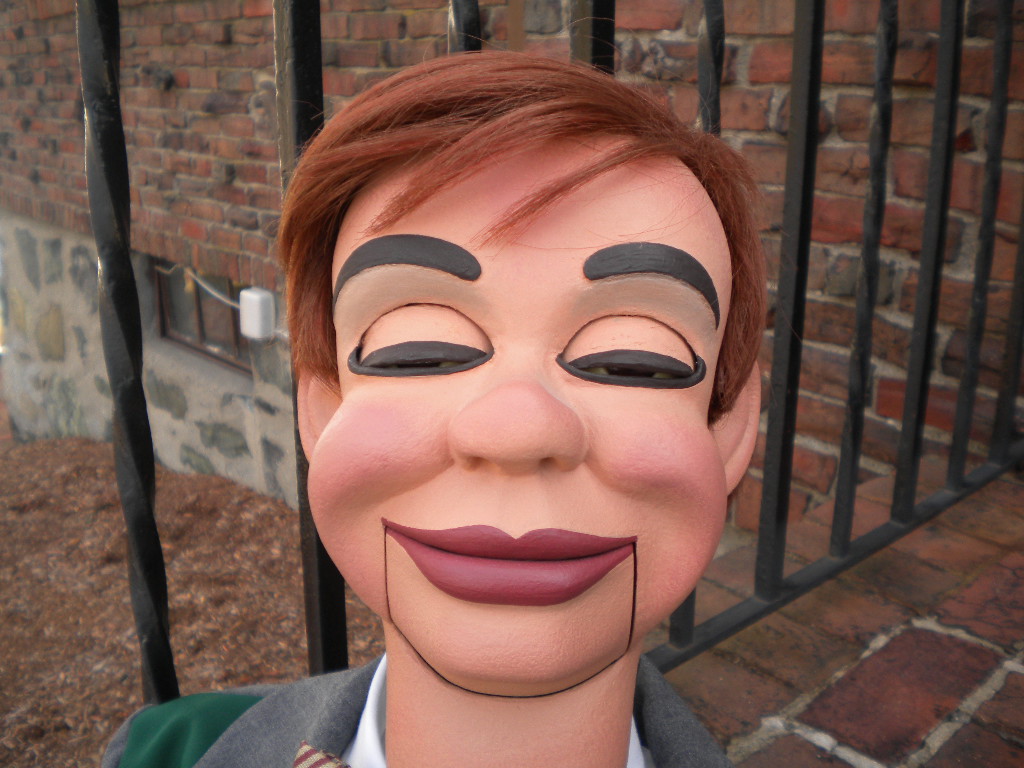
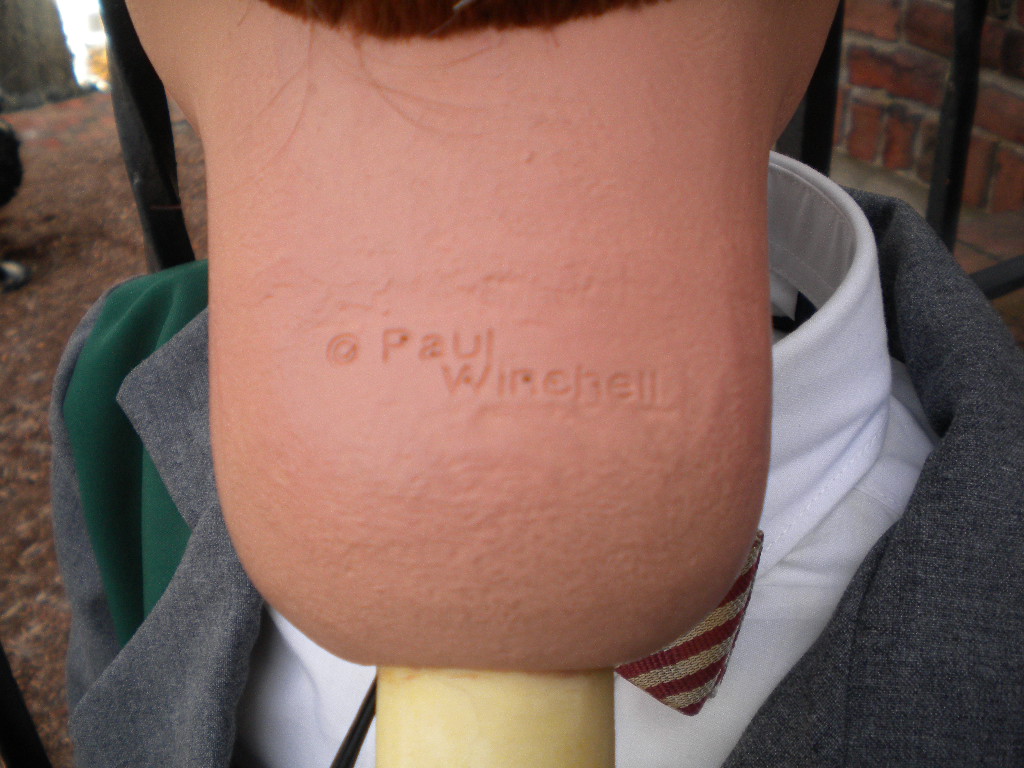
For years Guyll built Jerry Mahoney and Knucklehead Smiff replicas directly for Paul Winchell, under Winchell's own supervision, an arrangement that ran into the early 1990s and ended around 1994 or 1995.[8] The hands on the earliest of those figures were special, sculpted just for the project, and so few pairs were made that Winchell kept a couple for himself.[9] One Jerry in that run came with working blinkers, the only stock Jerry Guyll ever built that way, a population of exactly one.[8] And when a customer needed his pair in a hurry, Guyll told him plainly that the eye whites weren't painted and would yellow over time. The buyer took the figures anyway, eyes and all, which is about as honest a sales conversation as this whole archive has on record.[8] Dan Willinger, who has handled more figures than almost anyone alive, says he can spot a Guyll paint job on sight. One time he wrote to Guyll just to confirm it before he'd say so in print, and Guyll confirmed it.[24] That is the whole relationship between a good maker's reputation and his own signature. People learn to recognize it before anybody tells them to.
Know the character first
Guyll had one piece of advice he handed out for years, starting the very first time a stranger named Steve Hurst called him cold, from a payphone, in 1995, and kept repeating every time they spoke after that.[10] Most ventriloquists pick a face they like and never once think about who that face is supposed to be, Guyll told him. Know the character first, and the figure comes alive when you perform it. Buy on a face alone, and it never will.[3] He held himself to the same standard at his own bench, and it made him famously hard to satisfy. One afternoon he held up a head he had just finished painting and asked what people thought of it. Somebody told him it looked great, a perfect paint job. Guyll looked it over for a few seconds, said "Nope, I don't like it," and started the whole thing over again.[11]
The shop in Kirkland
Guyll and his wife Barbara lived in Kirkland, Washington, on the east side of Seattle, and the shop sat in the basement, past the laundry room.[3] Dummy heads sat everywhere, in every state of repair, hands and feet and eyes and wigs scattered around them, a television running the worst science fiction available in one corner, and Ray's own table dead ahead, command central, the spot he ran the whole operation from.[3] The far corner was where most of the mold making and head casting happened, so the man carved and cast in the same room.[3] Barbara was never a footnote to any of it. She co-wrote his book, she answered the phone when strangers called looking for advice, and Guyll said it best himself, at a gathering with friends: "How could I possibly exist without her."[12]
The book, and the man who named this whole archive
Guyll and Barbara wrote it down and sold it: How to Make Your Own Ventriloquist Figure, a real manual with his own phone number printed in the back.[13] That number is how Steve Hurst reached him in the first place.[11] And Guyll's fingerprints run deeper into this record than that. When Dan Willinger started collecting figures in earnest, Guyll sold him a Theodore Mack figure, the deal turned into a friendship, and when Willinger mentioned wanting to build a website, Guyll is the one who suggested a name first: Dummy Central. They talked it over and landed on something else instead. Ventriloquist Central.[14] A few years later, at a Vent Haven Convention, Guyll is also the one who introduced Willinger to a ventriloquist and web builder named Steve Hurst. Ventriloquist Central, the site behind most of what this archive knows, exists because of that one introduction.[14]
Restorer to the legends
Guyll didn't only build. He rescued. A Frank Marshall figure that had spent about sixty-five years lost in a damp basement, falling apart at the touch, came out of Guyll's shop, in the owner's words, utterly remarkable, one of the finest surviving examples of Marshall's 1930s work.[15] A pre-1924 Mack shop figure that George "Pinxy" Larsen's workshop had already restored once, back in the 1930s, came to Guyll's bench decades later in terrible shape again, and he brought it back a second time.[16] He repainted Jimmy Nelson's own Danny O'Day more than once over the years, keeping a working television figure working.[17] And when a McElroy brothers figure named Happy needed a full restoration, Guyll took it apart down to more than three hundred individual parts, reassembled every one of them, and repainted the head and hands to the McElroy scheme.[18] Collectors learned to spot his hand on sight: a hard black lash line drawn clean around each eye, a solid one-stroke brow, and an airbrushed blush that fades outward instead of stopping at an edge.[19] Guyll sits at the actual joining point of two separate lineages this archive has traced back by hand. The Frank Marshall estate passed from his sister Mae, to Brian Hamilton, to Bob Isaacson, and then to Guyll himself. The Jack Coats teaching line ran from Coats to Guyll to Steve Hurst. Both roads run through the same man, on their way to Ventriloquist Central.[20] And when a fellow collector asked whether it was all right to publish photographs of a mechanism Guyll had built years before, Guyll said yes without hesitating: information like that, he said, is crucial to keeping the whole art form alive.[21]
The circle
What survives

The book
Ray and Barbara Guyll wrote the manual themselves and sold it at his lectures, phone number included. It's how a stranger named Steve Hurst first found him.

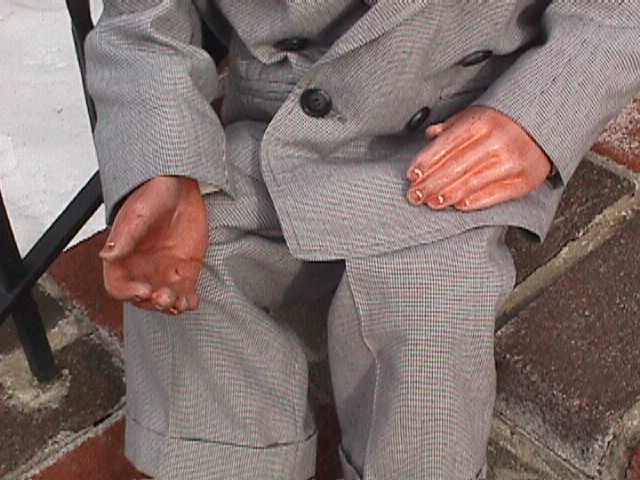
The first fiberglass figure
Sketched by ventriloquist Evie Van Buskirk, sculpted in clay by Guyll, and unveiled on stage at his first Vent Haven lecture in 1975. He cast two more, then destroyed the mold on purpose.

Ironjaw
Guyll didn't only build figures for other performers. This weathered old character was one of his own, from the years he took a figure on the road himself.

The master head
Before a figure gets a face, somebody has to sculpt the master the mold gets pulled from. This is one of Guyll's, sold through the collector market years later.

Corky, finished by a friend
Cast from Guyll's own head, hand, and body molds, then mechanized and painted after his death by Austin Phillips, the maker Guyll had personally trained.
What happens after
Ray Guyll died November 2, 2014, after a fight against lymphoma, with Barbara at his side.[1] Dan Willinger broke the news to the whole trade the next day and did not hedge on the assessment: one of the best ever at building and restoring ventriloquist figures, a man who could restore a figure back to its exact original look or give it his own signature instead, equally at home in wood, papier-mache, fiberglass, or resin.[22] His molds and castings went afterward to Austin Phillips, a friend he had made at a Ventriloquist Central Birthday Bash and personally trained. In the years after, Phillips mechanized and painted from those same castings, in the style Guyll taught him.[23] Guyll-attributed figures keep surfacing on the collector market, sold through WorthPoint and Invaluable listings, and plenty of them are built from his own head, hand, and body molds but finished by somebody else's hands entirely.[23] That is a strange kind of afterlife for a maker, and it is also exactly what every maker in this trade should hope for: the work outliving the argument over whose hands made it.

Fifty years fixing legends and casting new faces, and the man still let his own act go on the road for three years. Guts, or maybe he just wanted to hear what his own wood sounded like talking back.— Freddy Fiddlesticks, spokesdummy
The figures
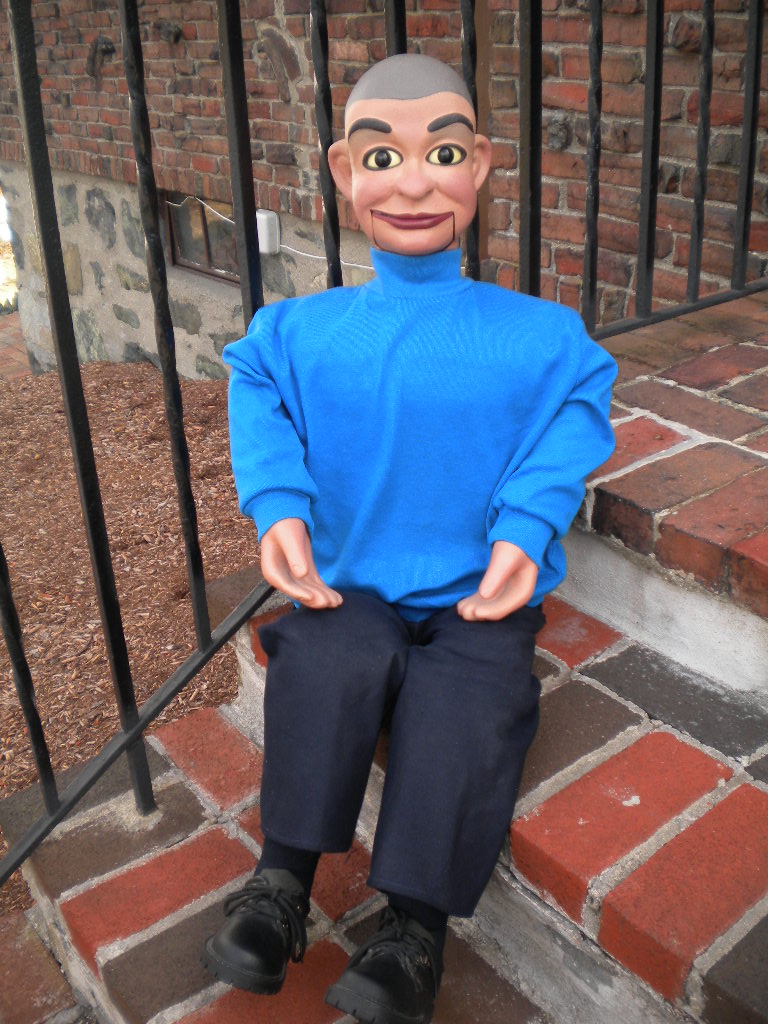
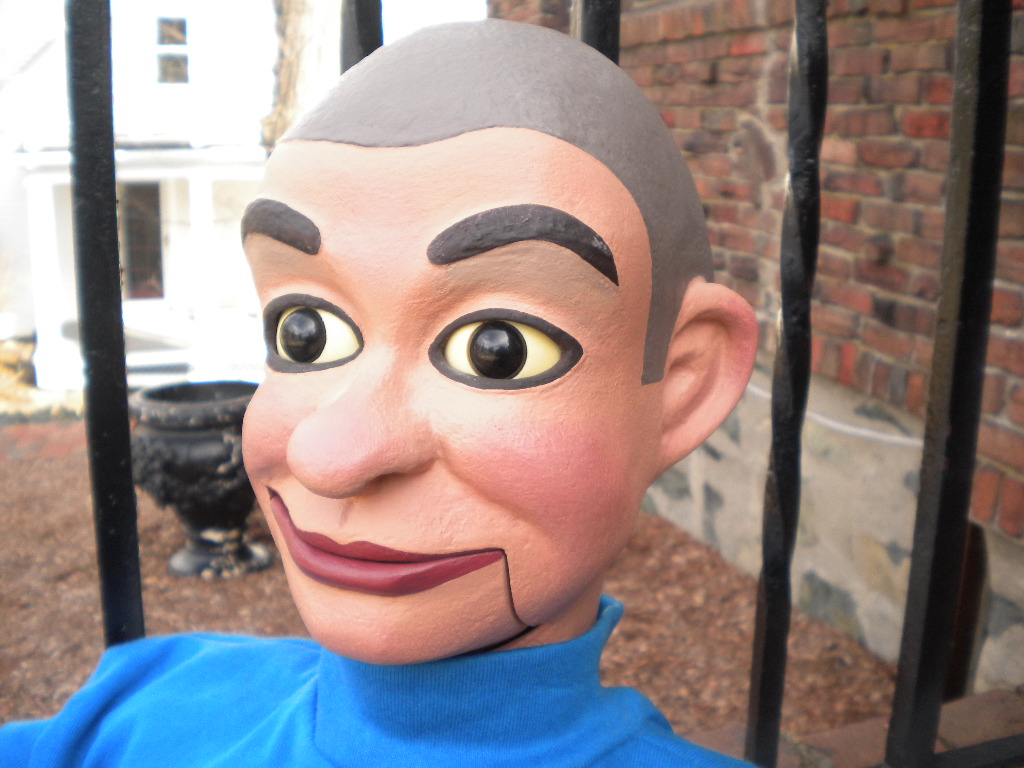
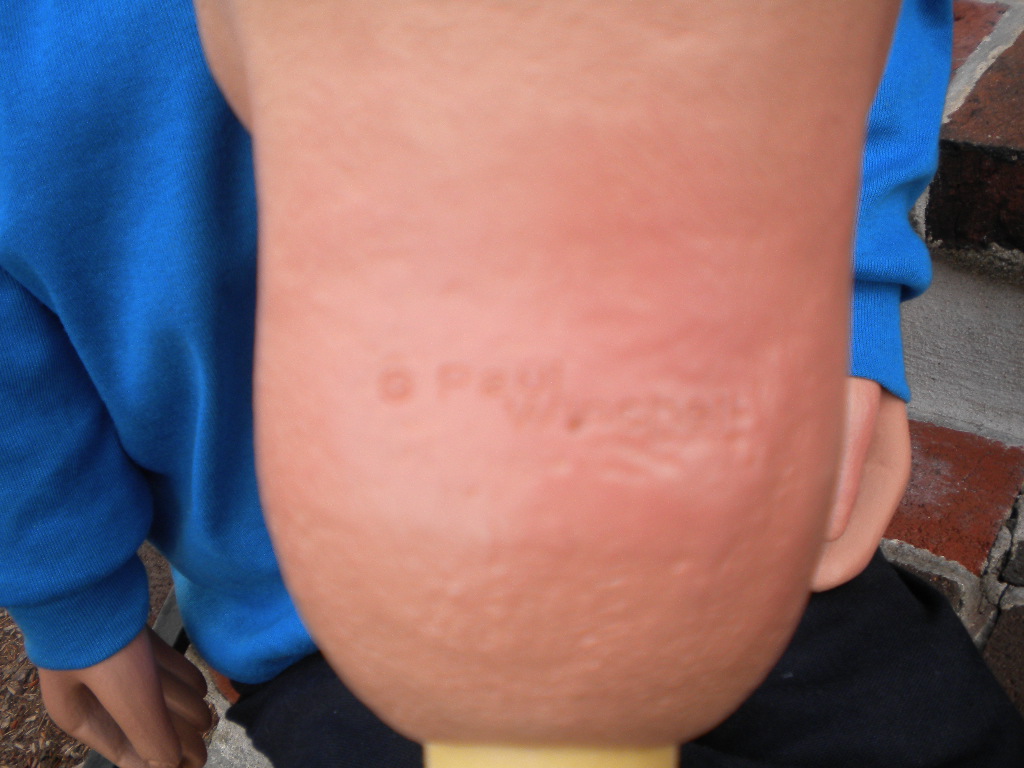
27 photographs across 2 cataloged objects. Each object is one entry in the register — where a character name covers two physical figures, they stay two entries, because the character outlives the object more often than the record admits.
Guyll 01 13 photographs
- Materials
- fiberglass
- Movements
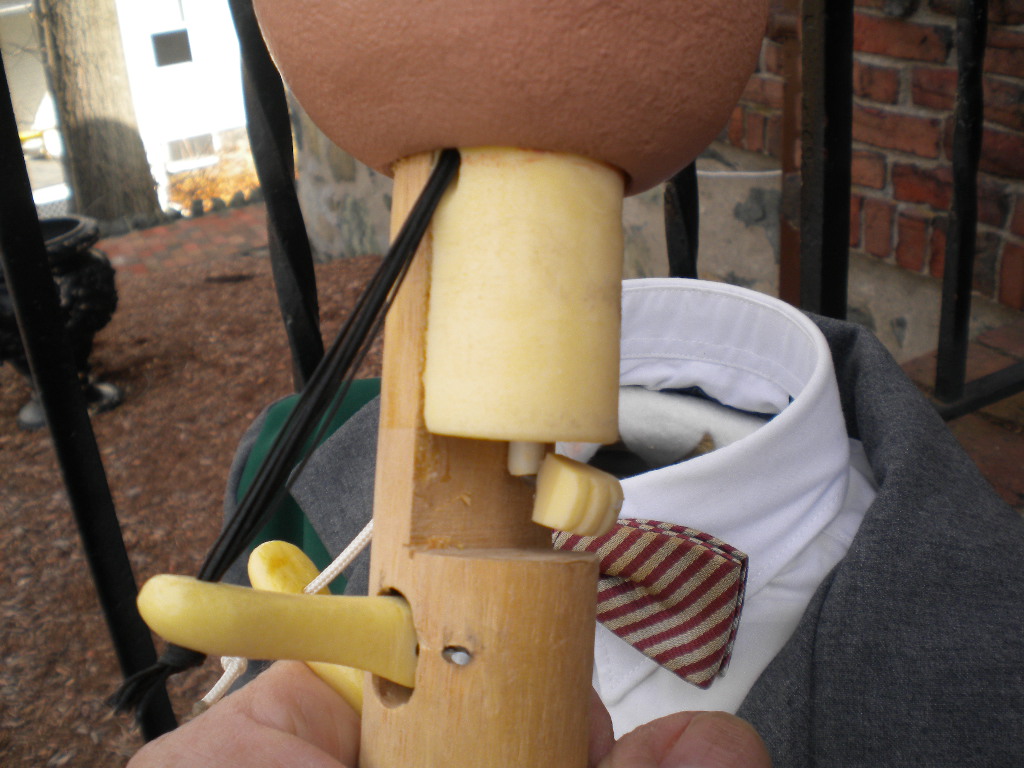
- slot jaw / moving mouth; self-centering eyes; winkers; tongue; spitter
- Dates given
- 1975
Guyll 02 jerry knuck 14 photographs
- Dates given
- 1994
Recorded owner Ventriloquist Central Collection as stated on the source page when it was written — not current ownership
Sources
- Barbara Guyll, obituary for Raymond E. Guyll, Ventriloquist Central Blog
- Ventriloquist Central Blog — Ray Guyll and the Cherchers
- Steve Hurst, via Ventriloquist Central — the Guyll workshop and the character doctrine
- Ventriloquist Central — the Guyll collection, on Jack Coats and the move from wood to casting
- Ventriloquist Central, Ventriloquism Tribute — figure makers directory
- Ventriloquist Central — the first fiberglass figure, 1975
- Jimmy Vee, direct statement (2026) — the Guyll figure-making book and Gary Koepke's 1975 lecture notes
- Ray Guyll, letter published by Dan Willinger, Ventriloquist Central Blog — the Winchell arrangement
- Ventriloquist Central Blog — Superb Ray Guyll Jerry Mahoney, the special hands
- Steve Hurst, via Ventriloquist Central — the 1995 phone call
- Ventriloquist Central — the perfectionism anecdote
- Ray Guyll, Ventriloquist Central Birthday Bash review, 2011
- Ventriloquist Central Blog — Ray Guyll's Dummy Building Information
- Dan Willinger, Ventriloquist Central Blog — naming Ventriloquist Central and meeting Steve Hurst
- Ventriloquist Central newsletter, April 2012 — the Marshall basement rescue
- Willinger Collection auction catalog, Session 2, Lot 12 (Crown Company, 25 Oct 2015) — the Mack figure restored by Pinxy Larsen, then by Guyll
- Clinton Detweiler, Mr. D's blog — repainting figures and their value
- Ventriloquist Central — Happy's restoration journey
- Willinger Collection auction photographs, Session 2, Lot 3 (2015) — the Guyll restoration paint signature
- Editorial note, this archive — the Marshall estate chain and the Coats teaching line, both converging on Guyll
- Dan Willinger, Ventriloquist Central Blog — Guyll's position on publishing figure mechanisms
- Dan Willinger, Ventriloquist Central Blog — announcement of Guyll's death, 2013
- Ventriloquist Central Blog — the Guyll castings and Austin Phillips
- Dan Willinger, Ventriloquist Central — recognizing and confirming Guyll's paint on the Jerry/Knucklehead pair