

Every family has the uncle who was famous before you were born, the one everybody still talks about like he might walk through the door any minute. In this family, Jimmy Nelson is that uncle. If you ever watched a dog sing about chocolate milk, or laughed as two wooden heads argued back and forth faster than should be possible, you were watching Jimmy work. Danny O'Day, Humphrey Higsbye, Farfel the Dog: three figures, one Chicago kid, and a career that ran from a ten-cent bingo prize all the way to a museum board meeting that changed the whole shape of our art.[1] So pull up a chair. Let me tell you about Jimmy.
A bingo prize and a shy kid from Chicago
He wasn't born into this business. He was bribed into it by a bingo hall. His aunt Margaret won a toy ventriloquist doll called Dummy Dan as the grand prize at a local bingo game and gave it to him for Christmas, when he was a boy of nine or ten.[1] He was painfully shy, the kind of kid who couldn't get a sentence out in front of the class. So he carried Dummy Dan to school for Show and Tell, and two grade-school teachers, Mrs. McSweeney and Mrs. Shanley, kept putting him up in front of the room to recite through the doll instead of through himself.[2] His father took the mouth from a cheap string-and-loop rig to a real lever mechanism, the same upgrade professional shops would later sell as a catalog item, done at home by a dad with his own two hands before anybody was paying for any of it.[2]
He went to Lake View High School in Chicago, the same school that had produced Edgar Bergen a generation earlier. Bergen went on to Northwestern. Jimmy went straight from graduation onto the road as a working ventriloquist, no detour, no backup plan.[3] He worked church basements, American Legion posts, and amateur nights at the local movie theater for a five-dollar prize, until people with real money started paying attention.[1]
The name with no lips in it
By the time he was ready for a professional figure, in the mid-1940s, Jimmy already had two men behind him. Herman Stoike, who performed as Uncle Herman, sponsored his membership in the International Brotherhood of Ventriloquists when Jimmy was just fourteen and taught him the mechanics.[4] Bob Evans, a working Chicago ventriloquist Jimmy idolized from the front row, took the kid backstage and tutored him every time he came through town, and Danny O'Day's whole attitude and voice trace straight back to Evans.[3]
Frank Marshall, one of the greatest figure makers this art has ever known, wouldn't just take an order and start carving. He came to one of Jimmy's own shows first, watched him work, and only then agreed to build the figure, carved (as Marshall always did) to bear a resemblance to the performer holding it.[2] And the name wasn't sentiment. It was engineering. Jimmy picked Danny O'Day on purpose, because it carried none of the hard consonants that fight a closed mouth, unlike McCarthy and unlike Mahoney, the two biggest names in the business he was trying to break into.[2] A ventriloquist named his own partner around the physics of his own lips. That tells you everything about how seriously he took the craft.
Two years later Danny was wearing thin, so Jimmy had Marshall build a backup. Except Marshall carved every head by hand, and no two ever came out quite the same. The new head didn't look enough like Danny to pass as him, so Jimmy kept Danny and turned the almost-Danny into somebody else entirely: heavy eyebrows, spectacles, a beret. Humphrey Higsbye was born because a replacement part didn't fit, which might be my favorite origin story in this whole family.[2]
Farfel, and the mistake that made him famous
Farfel started as an accident, too. One night in a nightclub, Jimmy picked up a stuffed dog a customer had left sitting on the piano and threw a low, growly voice into it on the spot. The room laughed. That was enough. He had Marshall build the character for real and named him Farfel, after a noodle dish he'd seen on delicatessen menus in the Borscht Belt.[2] A stray toy off a piano became one of the most famous mascots in American advertising.
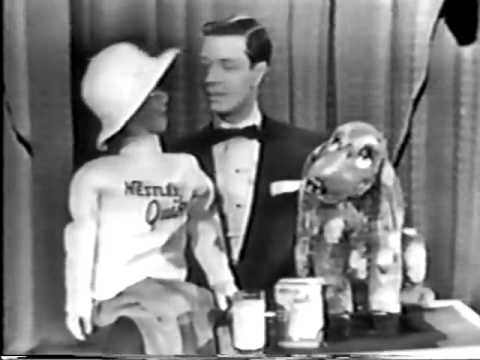
Nestlé hired him in 1955, and the whole ten-year run turns on one more accident.[5] At the audition, singing the jingle for the first time, Danny sang out N-E-S-T-L-E-S and Jimmy had Farfel answer with CHAW-KLIT, ad-libbed on the spot because it sounded right.[6] Then his finger slipped off the control mid-pitch and Farfel's jaw snapped audibly shut. Jimmy was mortified, certain he'd just blown the biggest job of his life in front of the executives deciding whether to hire him. Instead they loved it and told him to keep it in.[7] That accidental snap became the single most recognized gesture on the account, running on network television for the next ten years and turning a dog puppet into a household name.[8] Nobody plans the thing that makes them famous. You just don't flinch when it happens.
Forty million people a week
His first agent, Les Lehr, discovered him at a movie-theater amateur night in Chicago. His second agent, Lou Cohan, is the one who changed his life: raised his fees and landed him his own local show, Holland's Happiness House on WGN-TV, when Jimmy was twenty-one.[1] That show was the hinge. It got him booked on Ed Sullivan's Toast of the Town in 1950, and Sullivan clearly liked having him back.[2]
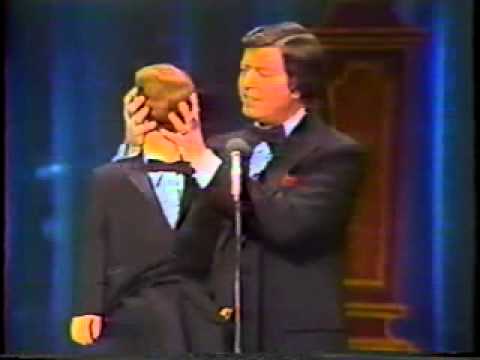
Then came the job that put him in every American living room. Starting New Year's Day, 1952, Jimmy went on Milton Berle's Texaco Star Theater. He never auditioned for it. The producers had already tried out Senor Wences and Clifford Guest and figured Paul Winchell wouldn't leave his own program for the gig, so they went looking, caught Jimmy's act live at Radio City Music Hall, and hired him on the spot.[6] The audience was enormous by any measure: something like forty million people, every single week, at a time when a television set in the house meant that set was tuned to Uncle Miltie.[6] Television didn't replace the nightclub circuit, it just priced it higher. Jimmy worked Radio City Music Hall six times, the Copacabana five times, the Latin Quarter, the Cocoanut Grove, the Chicago Theater, the Chez Paree, and in Las Vegas the El Rancho, the Flamingo, the Desert Inn, and the Riviera.[1] A national television star was still working the room every night.
The man who saved the museum
Here's the part of Jimmy's story I care about most. His relationship with Vent Haven Museum began in 1944, when founder W.S. Berger read an article about a teenage Chicago ventriloquist in a magic magazine called Tops and wrote asking for a photograph for his collection. They stayed friends and correspondents for the rest of Berger's life, Jimmy signing his letters with the running joke initials JN slash DO'D, for Danny O'Day.[9]
When Berger died in 1972, the museum was in real trouble. The board was staring at a fixed pot of estate money and no income stream, and everybody could see the place would close within a few years without one. The board's own minutes name the ventriloquist who fixed it: Jimmy Nelson. He's the one who suggested an annual convention as a way to fund the museum going forward.[10] The first ConVENTion ran in 1975, and fifty years later that gathering remains a significant part of what keeps the museum going. Every dealer's room, every figure-makers panel, every Junior Open Mic this art has held since traces back to one performer's idea, offered to save a place he loved.[10] He designed its teaching centerpiece, too: a session called Vent Videos, where he showed film clips of the old greats so newcomers could actually see comedic timing and material that worked, and he ran that session for decades.[9]
The honors piled up because the debt was real. Board of Advisors since 1973. Vent Haven's Ventriloquist of the Year in 1979. The Hall of Fame in 1987.[9] In 2011, the whole ConVENTion turned into a tribute to his seventy years in the business, the board named him Dean of American Ventriloquists, and the building on the grounds everybody used to just call the Ship Building got renamed after him.[11] In 2018, they made him the museum's first Director Emeritus, ever.[12] He mentored the way he'd been mentored: Herman Stoike had vouched for a fourteen-year-old Jimmy at the IBV, and decades later Jimmy vouched for a young performer named Stephen Thurston and paid his dues himself.[9] One of the kids he pulled up alongside him was named Mark Wade, who watched Jimmy's Nestlé commercials on television and got hooked on the spot. Jimmy brought Mark to Vent Haven in person for the first time.[13] Mark Wade went on to run the very ConVENTion Jimmy had invented, for years, as its own Executive Director. That's not influence. That's a straight line, one man to the next, holding the whole family together.
The three of them, and what they were worth to people

Danny O'Day & Farfel
Jimmy with the Nestlé's-era Danny and Farfel, on the set that ran for ten years and turned an ad-libbed jingle into a piece of American childhood.

The whole family
Danny O'Day, Farfel, and Humphrey Higsbye, all three at once. The portrait Ventriloquist Central ran for years alongside his television biography.

Farfel Barks
The Barker magazine's premier issue, 1999, cover story on Farfel himself, signed by Jimmy in the corner. The dog had his own fan press.

Seventy years of laughter
Tom Ladshaw's tribute book, handed out at the 2011 ConVENTion that celebrated Jimmy's seventy years in the business, the same year the board named him Dean.

Still working the room
Jimmy and Danny with collector Dan Willinger at a Vent Haven ConVENTion. He kept showing up for decades, which is exactly why the young ones still knew his name.
The circle
What he taught without ever opening a school
In 1964 and 1966 Jimmy cut two instructional records for Juro, Instant Ventriloquism and Ventriloquism 2, and the outfit that still sells the remastered CDs calls them an unparalleled legacy that will live on for innumerable successive generations.[14] That's not just marketing copy. Lee Cornell remastered them in 2007 with Jimmy's own blessing and donated part of the proceeds back to Vent Haven, and Cornell says flatly that Jeff Dunham learned ventriloquism from Jimmy's albums and still considers them one of the finest training courses available.[14] In the late 1970s, when Maher Studios added audio cassettes to its home course, Jimmy recorded a personal greeting for every student, free of charge, because that's who he was.[15]
He taught technique the same generous way in print: break your routine into numbered sections so a laugh or a heckle never costs you your place, keep the figure reacting instead of sitting there dead, never let him lean away from you.[15] His own explanation of his lip control, when somebody finally asked him straight out, ran two sentences long: think one thing and say another, and if you think hard enough, it comes out sounding like what you're thinking.[6] No diagrams, no syllabary, just a man who had been doing it since he was a boy telling you the truth about how it actually worked. Bob Isaacson, another master of the craft, once named Jimmy's real signature move on camera: he almost never moved the figure's eyes side to side, he turned Danny's whole head instead, so subtly most people never noticed it was happening. When Isaacson performed his own tribute to Jimmy, he made sure to copy that exact head turn, because that was the detail that actually made it Jimmy's voice.[16]
The last act
In the summer of 1998, the Las Vegas convention gave him its Lifetime Achievement Award, and film critic Leonard Maltin himself handed him the Askin Award in front of more than 350 people. Betty and all six kids came out for it, a rare full family reunion built around one of Jimmy's own honors.[17] During the tribute, one of his grandchildren walked out on stage holding a small Danny O'Day that Frank Marshall had carved decades before, the kind that once sold for $125. The family still has it.[17]
When the networks stopped calling, Jimmy didn't stop working, he just got local. From 1971 into the 1990s he was the on-camera spokesman for First Federal Savings and Loan in Fort Myers, Florida: the same job, the same figures, a smaller map, and it outlasted both of his national campaigns combined.[1] He and Danny took the old cigarette-routine bit from the Sullivan days and flipped it into an anti-smoking message for the American Lung Association, playing it for fourth and fifth graders in schools for years.[1] He never really retired. In 2010, a specialist blog thought it worth reporting that Jimmy Nelson had just entertained a near-full house at the Cape Coral Historical Society.[18] A man who had once held forty million viewers a week was still filling a room at a local historical society meeting, and the room was full, and that is the whole point.
Jimmy Nelson died in Cape Coral, Florida, on September 24, 2019, of complications from a stroke. He was ninety.[2] Betty, his wife of more than sixty years, and their six children survived him.[19] Danny O'Day, Farfel, and Humphrey Higsbye all live at Vent Haven now, inside the building that carries his name.

Ten cent bingo prize to Nestle's chocolate spokesdog, and they say wooden heads can't appreciate compound interest.— Freddy Fiddlesticks, spokesdummy
Timeline
- 1945 — Commissioned Danny O'Day, his first professional figure, from Chicago carver Frank Marshall.
- 1947 — Had Marshall build a second figure, which became a distinct character, Humphrey Higsbye, rather than replace Danny.
- 1950 — Made his first appearance with Danny O'Day on The Ed Sullivan Show and joined Texaco Star Theatre as a regular.
- 1955 — Hired by Nestlé for a chocolate advertising campaign featuring Danny O'Day and Farfel the Dog.
- 1958 — Introduced the cat character Ftatateeta.
- 1959 — Released the LP Pinocchio on Cricket Records, featuring his four main figures.
- 1960 — Began hosting the local New York children's program Studio 99-1/2.
- 1992 — Farfel returned to television as a hand puppet for a Nestlé holiday campaign.
- 2009 — Appeared in the ventriloquism documentary I'm No Dummy.
- 2011 — Given the honorary title "The Dean of American Ventriloquists" and collaborated with Tim Selberg on a new figure honoring Danny O'Day.
On video
-
 Jimmy Nelson Nestle Quik Commercial 1956
-
 Jimmy Nelson On HBO Special
-
 Jimmy Nelson Interview Clip 3
-
 Jimmy Nelson The Dean Of Modern Ventriloquism
-
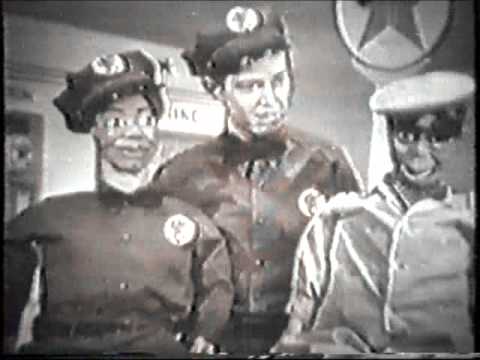 Jimmy Nelson Danny O'Day And Ronald Reagan
-
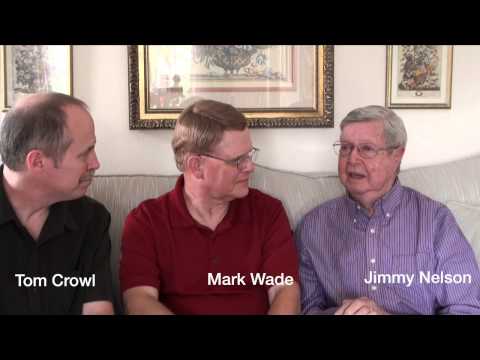 Jimmy Nelson Interview Clip No. 2
-
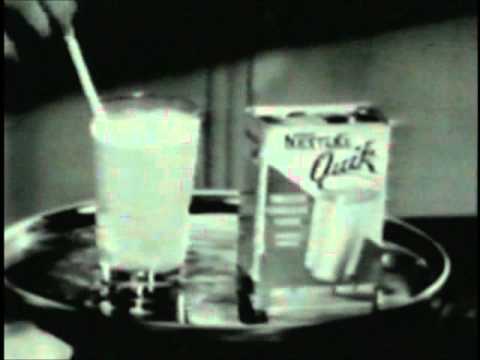 Jimmy Nelson Vintage 1950s Nestles Quik Commercial
-
 Jimmy Nelson Interview Clip 6
-
 Jimmy Nelson Interview Clip 4
-
 Jimmy Nelson Interview Clip 5
Sources
- jimmydannyfarfel.com, the Nelson family estate site, biography page
- Find a Grave memorial 212203053, James Edward "Jimmy" Nelson
- International Ventriloquist Society — Jimmy Nelson profile
- The Oracle (International Brotherhood of Ventriloquists), January 2, 1952 issue — oracle:1952-01-02
- Ventriloquist Central Blog, "Jimmy Nelson 2012 Hall of Fame Coin" (Nestlé contract dated 1955)
- "James Edward Nelson, 1928-2019: The Interview," vent-o-gram.com
- Vent Haven Museum, Figure of the Month archive
- Puppet Arts Museum ventriloquism exhibit program — scanned document, Jimmy Vee collection (ocr-new)
- Vent Haven Museum, "Happy Birthday Jimmy," December 15, 2018
- Vent Haven Museum, "The Long and Winding Road," December 3, 2019
- Vent Haven Museum, Tom Ladshaw biography excerpt
- Vent Haven Museum, "Museum Announcement," February 1, 2018
- "Mark Wade: The Interview, Part II," vent-o-gram.com
- The Ventriloquist Academy / Lee Cornell, product page
- Clinton Detweiler, "From Jimmy Nelson," Mr. D's blog
- Ventriloquist Central Blog, "Danny O'Day and Donny O'Day: Ventriloquism Manipulation"
- Newsy Vents No. 51 — scanned document, Jimmy Vee collection
- Ventriloquist Central Blog, "Ventriloquist Jimmy Nelson Entertains at Historical Society Meeting"
- jimmydannyfarfel.com, "About Betty" page