

Britain has always loved a posh drunk, and Ray Alan built one of the best characters ventriloquism has ever produced. Lord Charles was a monocled aristocrat with a slur so convincing that the International Ventriloquist Society’s own profile of the man called him, flat out, the top ventriloquist in Britain[1], a reputation he carried across British television for more than thirty years.[2] Pull up a chair. Let me tell you how a Lewisham theater kid built the drunk who solved a problem the whole art was about to run into.
A magician at the Lewisham Hippodrome
He was born Raymond Alan Whyberd, on September 18, 1930.[3] At five years old he entered a talent contest at his local Gaumont cinema in Lewisham, South London.[4] At thirteen he became a call-boy at the Lewisham Hippodrome, the backstage kid whose job is to cue each act onto the stage, and he used the position the way every sharp kid in this business always has: he started doing his own magic sets between the other acts, plus impressions, plus ukulele.[5][1] His ventriloquism wasn’t even proper ventriloquism yet. He pretended the voices were coming from boxes.[1] His first official show as a ventriloquist came at nineteen.[1]
Here’s a detail I love: the earliest mention of Ray Alan anywhere in this archive has nothing to do with Lord Charles at all. In March 1957, The Oracle, the International Brotherhood of Ventriloquists’ own newsletter, reported that “Brother Ray Alan, England, is making a hit with his vent novelty, a Brazilian Parrot. The bird is carved of wood and looks and acts like a live parrot.”[6] A wooden bird, years before the world ever met the drunk in the monocle. Every act starts somewhere smaller than the one that makes you famous.
The face of Stan Laurel
In 1954, Ray Alan landed a spot on a music-hall bill with Laurel and Hardy, on their final tour of Britain, the same tour later dramatized in the film Stan and Ollie.[5][3] He didn’t waste the access. He studied Stan Laurel’s own face and asked for a figure built off it, with one addition. “Just change the hair and put a monocle on it,” Alan is quoted saying. “That’s the face I want.”[2] Lord Charles made his first appearance at a charity show at Wormwood Scrubs Prison in London.[4] The finished figure was an upper-class drunk, monocled, permanently a few drinks into the evening, and one of the best bits in the character’s own act had Lord Charles perform HIS OWN ventriloquism routine, working an even smaller dummy propped on his lap.[5] A dummy inside a dummy. That joke only lands if the room already loves the first one.
Years later, a Laurel and Hardy fan podcast tracked Ray Alan down for an interview about those days on the road with the duo, rare footage included. He died not long after it aired, so it stands as one of the last recorded interviews he ever gave.[7]
By April 2002, Ray Alan was ready to let some of his figures go, and Bonhams in London sold four of them at auction: the Pageboy (1949), the original Lord Charles (made in 1958), Mikkie the Martian (1957), and Tich and Quackers (1963).[8] The catalog credited the maker only as “Insul,” almost certainly the Insull family, London’s own figure-making house for generations. The sale ran a two-page spread in the catalog with Lord Charles pictured on the back cover, which means the auction catalog itself became a collector’s item.[8]
Lips of stone
Every ventriloquist of Ray Alan’s generation watched television arrive and understood, fast, that it changed the terms of the whole craft. He said so himself: “Ten rows back at the Woolwich Empire it didn’t matter if the vent’s mouth was moving or not. But when TV came along, I knew I wasn’t going to be able to make a living doing 'gottle of geer' and 'grown gread and gutter' for the rest of my life.”[1] Distance had always forgiven the lips. Television removed the distance.
Most vents answered that problem by drilling harder on jaw control. Ray Alan answered it with a character. Lord Charles spoke with a drunken slur, and the slur let Alan work with a minimum of mouth movement, exactly the kind of movement a camera in close-up was built to catch.[1] It worked. The people who tracked this art closest described him with two words: lips of stone.[1] Lord Charles made his television debut on the BBC’s The Good Old Days in the 1960s, and the pair became regulars.[1][4]
More than one puppet
Lord Charles was never the only figure on the bench. Ray Alan created Ali Cat for HTV’s Magic Circle in 1977, operated Mikki the Martian in an early television production, and shot a 1960s travel series with Lord Charles called Britain By Jove, footage of which survives at British Pathé.[9][10] He hosted his own children’s program, Tich and Quackers, from 1963 to 1964, voicing both puppets himself.[5]

Ali Cat
Created for HTV’s Magic Circle in 1977. A different figure, a different bit, and proof the man had more than one act in him.

The interview
Ray Alan sat for a television documentary about the art itself. He talked shop the way only someone who solved a real problem in it could.

Lord Charles, up close
The monocle, the slur, and the face borrowed from Stan Laurel. This is the character that beat the television camera.

On the road
Fairgrounds, cabaret rooms, cruise ships. Ray Alan and Lord Charles worked every kind of stage Britain had.
He worked constantly, and he worked everywhere: Celebrity Squares, Give Us a Clue, Family Fortunes, Bullseye, 3-2-1, The Bob Monkhouse Show, and Sunday Night at the London Palladium, plus his own hosting jobs on Where in the World and It’s Your Word, plus two seasons on the BBC’s Ice Show.[1][4] From 1980 to 1988 he hosted Radio 2’s The Impressionists, after guesting on it a few seasons earlier.[1] In 1985 he played Bob Hope’s 82nd birthday show at London’s Lyric Theatre.[1] And in 1986, Channel 4 let him present a documentary about the art of ventriloquism itself. He called it A Gottle of Geer, and if you caught the joke earlier on this page, you already know exactly why that title is funny.[1]
He also wrote. Under the pseudonym Ray Whyberd, which was simply his own real surname, he scripted for Tony Hancock, Dave Allen, Morecambe and Wise, The Two Ronnies, and Bootsie and Snudge.[5][4] Late in his career, much of the work moved to sea: in 1996 and 1997 he performed on the P&O liners Canberra and Oriana on their world cruises, and on the QE2.[1] He kept performing into his seventies. His last stage appearance was a charity concert in Bridlington, in November 2008.[4] In his final years he turned to fiction too, publishing mystery novels that included Death and Deception in 2007 and A Game of Murder in 2008.[4]
The circle
The last bow
The International Ventriloquist Society named Ray Alan to its Ventriloquist Hall of Fame, one of just ten performers given a full plaque page of pictures and video.[11] In 2018, an IVS reader named Tim Fisher was asked to name his own pick for the greatest ventriloquist of yesteryear. He didn’t hesitate. He named Ray Alan, and the same praise turns up, independently, in Paul Zerdin’s own biography.[12][4] Full name Raymond Alan Whyberd, career spanning over half a century even though the popular run was the 1950s through the 1980s.[13]
Ray Alan died suddenly at his home in Reigate, Surrey, on May 24, 2010, at seventy-nine.[3] Word reached the community within days. Two independent posts, roughly a week apart, both landed on the same date.[14][15] Every act needs a good exit, and this is a fair one: a Lewisham kid who built a drunk out of a movie star’s face, solved television’s biggest problem for his whole generation of British vents, and left behind a body of work specific enough that you can put a maker, a year, and an auction house against nearly every figure he ever owned.

Started as a wooden parrot in a newsletter nobody remembers, ended up the poshest drunk on British telly. I've always said carve the beak first, the peerage comes later.— Freddy Fiddlesticks, spokesdummy
On video
-
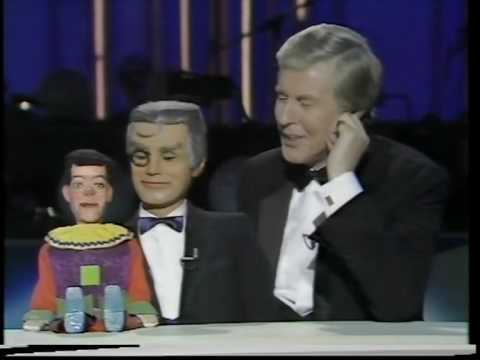 Ray Alan With Lord Charles 1986
-
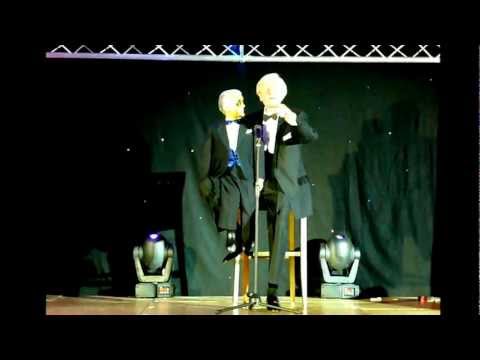 Ray Alan Evening Stand Up Performance
-
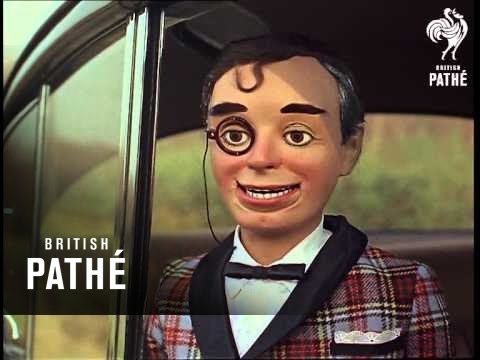 Ray Alan Lord Charles Britain By Jove Program 2 Part 1
-
 Ray Alan Lord Charles Britain By Jove Program 1 Part 2
-
 Ray Alan Lord Charles Britain By Jove Program 1 Part 1
-
 Ray Alan Lord Charles Britain By Jove Program 2 Part 2
-
 Ray Alan Lord Charles Britain By Jove Program 2 Part 3
-
 Ray Alan Lord Charles Britain By Jove Program 3 Part 1 And 2
-
 Ray Alan Lord Charles Britain By Jove Program 4 Part 1
-
 Ray Alan Lord Charles Britain By Jove Program 4 Part 2
- Ray Alan Lord Charles Britain By Jove Program 4 Part 3
- Ray Alan On The Good Old Days 1974
- Ray Alan On How Do They Do That
- Ray Alan And Lord Charles On Paul Daniels Show 1989
Sources
- International Ventriloquist Society, “Ventriloquist Ray Alan” profile
- Clinton Detweiler, Mr. D’s blog — “Ray Allen, Lord Charles,” December 2010
- Find A Grave memorial 52824541: Ray Alan (photograph by Dennis Wayne Evans)
- Magicpedia (Genii Magazine), “Ray Alan”
- Trav S.D., “Huzzah for Ray Alan and Lord Charles!,” Travalanche, Sept. 18, 2021
- The Oracle, March 4, 1957 (International Brotherhood of Ventriloquists)
- Cybervent (ventriloquist.org) — Laurel and Hardy Forum Podcast note, January 2011
- Bonhams sale notice, April 2002, reprinted in Newsy Vents No. 54 — scanned document, Jimmy Vee collection
- Ventriloquist Central, “Ventriloquists of the 20th Century” — Ray Alan tribute entry
- Ventriloquist Central, “Ventriloquists on Stage” tribute page
- International Ventriloquist Society, Ventriloquist Hall of Fame
- International Ventriloquist Society blog — reader comment (Tim Fisher), August 10, 2018
- “Ray Alan,” FamousFix profile
- Ventriloquist Central Blog, “Sad News, Ventriloquist Ray Alan,” 2010
- Clinton Detweiler, Mr. D’s blog — “Ray Alan,” May 2010